Validated Shipping Systems are the Foundation of Risk-Mitigated Animal Health Logistics
Animal health logistics are entering a phase where variability is no longer tolerable. Vaccines, biologics, reproductive materials, and advanced therapies are sensitive to critical parameters like temperature and handling conditions, and as regulatory expectations continue to move toward tighter controls and clearer documentation, shipping has become so much more than a support function.
For many organizations, shipping systems were historically treated as interchangeable commodities. As long as it could maintain temperature long enough to get material from point A to point B, that was good enough. But that model no longer holds, and “good enough” performance leaves too many unanswered questions when sensitive materials move through unpredictable environmental conditions and increasingly complex handoff points. What animal health programs require now are shipping systems that behave predictably, under defined conditions, every time they are used.
Validated shipping systems change how animal health organizations manage risk in transit. When a shipping system has been intentionally engineered and routinely requalified and validated before each use, teams know how it will behave… even when shipping lanes or environmental conditions shift, or handling isn’t ideal. That predictability allows sensitive products to move through temperature-controlled lanes with confidence. Without it? Every shipment is a new variable, and every deviation becomes a question of whether it was a failure of the shipping system or the process itself.
Why “Good Enough” Shipping Isn’t Enough
The limitations of legacy shipping approaches have become more visible as animal health products have evolved. Vaccine formulations have tighter stability thresholds, and advanced therapies have narrow thermal tolerances along with high material value (and limited replaceability). Even products once considered forgiving now face closer scrutiny.
Distribution pathways, however, have not adjusted. Shipments still move within carrier networks built for efficiency rather than sensitivity. Delays occur or routes change. When shipping systems are not proactively validated to behave consistently, organizations are forced to manage uncertainty instead of risk. This is where “good enough” shipping fails, and where validated shipping systems remove much of the ambiguity.
Applying the Rigor of Human Health Requirements to Animal Health Logistics
Animal health regulations have historically placed fewer explicit requirements and standards on shipping systems than human medicine, but that distinction is narrowing. Regulators increasingly expect organizations to demonstrate not only compliance with what happens while materials are still in the laboratory or manufacturing environment, but control over what happens in transit between facilities or en route to final drug delivery.
Cryoport Systems approaches animal health logistics with the same rigor applied in human health. All shipping systems operate within ISO 21973-certified processes that govern the preparation, handling, monitoring, and documentation of every shipment. This allows animal health organizations to proactively meet rising expectations without redesigning their logistics approach each time standards evolve.
Requalification and Validation of Every Shipping System, Every Time
Validation defines how a shipping system should perform, and requalification ensures it continues to meet performance expectations. Shipping equipment moves through varying environments and handling scenarios, and requalification ensures that performance does not drift in ways that are unpredictable or that remain invisible.
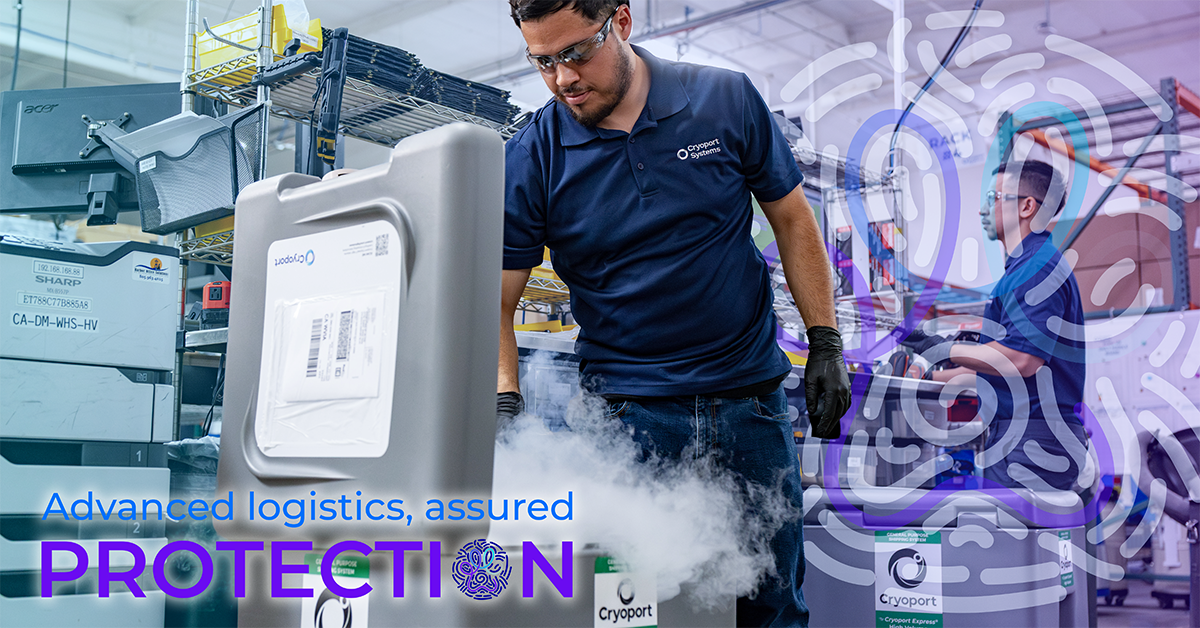
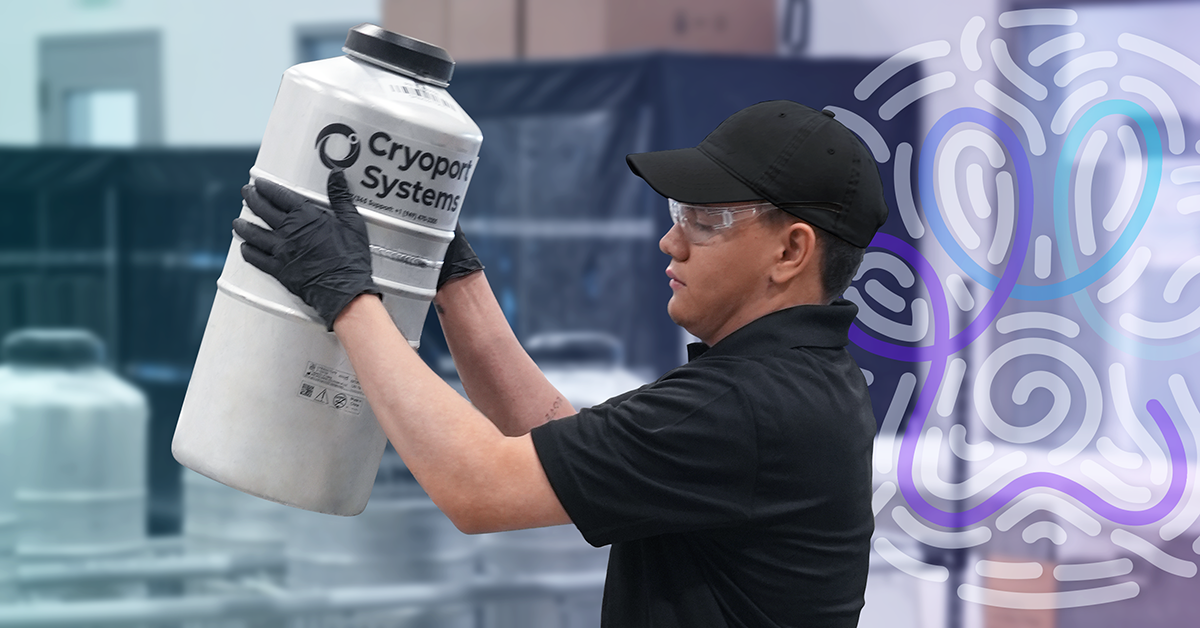
Cryoport Systems requalifies every shipping system before every use. Visual inspection alone cannot confirm thermal readiness or system stability, so every shipper undergoes a full requalification process before every use. This includes a comprehensive physical inspection, LN2 capacity testing, and verification of minimum hold time. If a shipper fails to meet any requirement, it is removed from the fleet following final QA evaluation. These protocols are consistently applied across every facility in our global network, closing a critical risk gap by ensuring validated performance remains an operational reality that organizations can rely on.
Thermal stability is only one component of system integrity. Environmental control plays an equally important role, especially for biological materials that support the life sciences.
Cryoport Systems applies Veri-Clean®, a proprietary cleaning and disinfection protocol that was developed to virtually eliminate the risk of cross-contamination. It’s the first and only validated process of its kind in life science logistics, achieving a >6 log (99.9999%) reduction of biological contaminants like bacteria, viruses, and fungi. Every shipping system and stainless-steel accessory undergoes rigorous decontamination before each use, ensuring that every shipment meets the highest standards of biosecurity. For animal health applications, where contamination can compromise breeding programs, clinical outcomes, or regulatory compliance, Veri-Clean provides peace of mind and proven protection.
Traceability that Supports Oversight
Even the most rigorously validated and requalified shipping system must be supported by clear, reliable records. As animal health oversight becomes more rigorous and begins to catch up to the standards seen in human medicine, organizations are increasingly expected to maintain audit-ready records that detail not only what happened to a shipment, but also where custody changed and under what conditions the materials were maintained throughout transit.
Cryoport Systems embeds compliance into every shipment. Our Chain of Compliance® process captures and validates every detail, providing full traceability and documented assurance for every step in the journey. Integrating equipment history, commodity condition, calibration records, and in-field event data into a single, auditable system, each shipment meets the highest standards of (documented) quality and reliability.
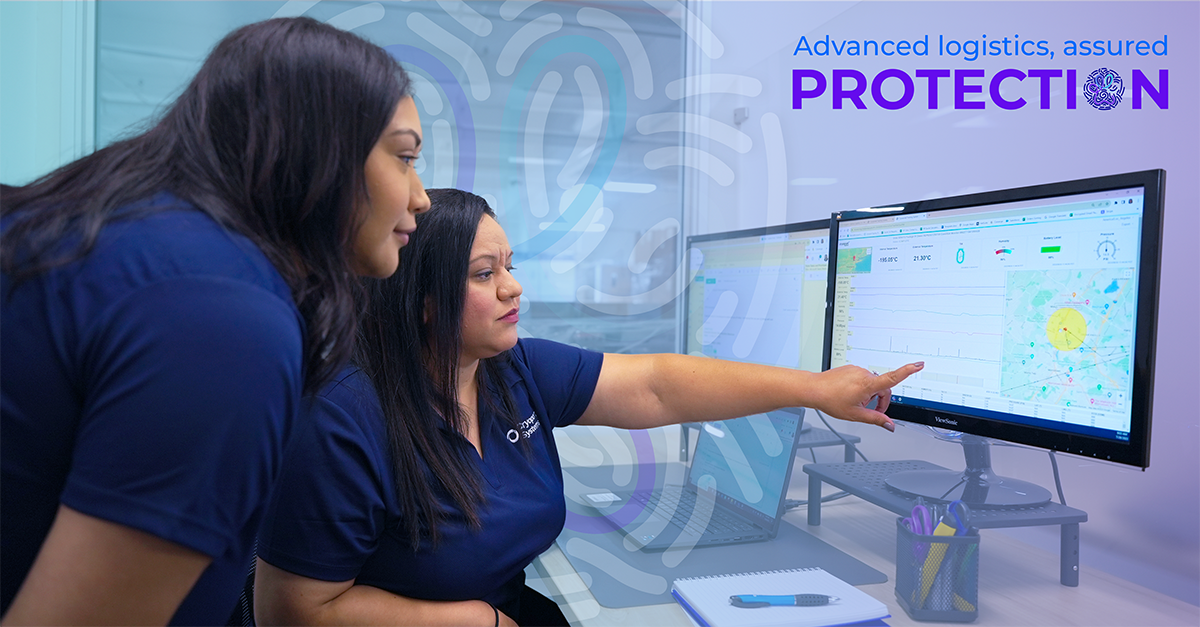
Advanced informatics within Cryoportal® logistics management system provide full visibility and proactive risk mitigation while materials are in transit. The system allows continuous monitoring of temperature, geolocation, and other critical parameters, enabling intervention if anomalies occur. By combining validated protocols with advanced technology, Cryoport Systems transforms compliance into a strategic advantage for animal health programs.
Building a Stable Foundation for What’s Next
From large-scale vaccine distribution to emerging advanced therapies and high-value reproductive programs, validated and requalified shipping systems better position animal health organizations to scale responsibly as products and oversight requirements continue to evolve.
Animal health organizations can’t control weather patterns or global distribution demands, but they can control which shipping systems they use to build confidence in how they’ll behave in real-world scenarios. Validated shipping systems reduce risk by removing uncertainty. They give teams a clear understanding of how equipment will perform under stress, and requalification of every shipper before every use ensures that performance remains consistent.
For animal health programs responsible for biotherapeutics and sensitive biomaterials, shipping can no longer be treated as a variable to be managed downstream. It needs to be a controlled system designed to behave as expected across real-world conditions. That is what validated shipping systems provide, and why they are now essential to risk-mitigated animal health logistics.