The Visibility and Traceability Animal Health Programs Need
Temperature-sensitive materials now move through animal health programs in far greater volumes, and that shift has raised the bar for how their transit needs to be documented. Teams responsible for oversight want documentation that reflects actual handling conditions from origin to delivery, with enough detail to support a clear assessment of risk. While the regulatory environment for animal health lags behind that for human health, programs are increasingly expected to provide records that reflect the actual conditions and custody of the material throughout transit.
That expectation exposes the weak spots in many logistics processes. Most organizations can explain parts of a shipment’s path, but the full history is harder to assemble. A clinic might record preparation and handoff, yet have no detail about how long the package waited at a carrier facility. A data logger may show when a temperature shift occurred, but not who had responsibility for the shipment at that moment. These gaps create friction during audits and complicate investigations, especially when several partners rely on separate documentation systems and none of them capture the complete picture.
Chain of Compliance® was developed to close those gaps. It integrates custody, condition, and equipment performance into a single documented record that aligns with how quality teams review evidence. Instead of piecing together details from multiple sources, programs have a unified account that can support routine oversight and formal inspections. This level of traceability has become an operational necessity for any organization that depends on shipment integrity, and it increasingly influences how animal health programs evaluate their logistics partners.
Where Traceability Breaks Down
Most animal health organizations intend to maintain complete shipment records, but the logistics environment makes this difficult. A shipment may leave a clinic with proper documentation, yet the visibility often fades once it enters the carrier network. Each party records what matters to their own operations, and those fragments rarely combine into a coherent account. By the time a shipment reaches its destination, the receiving team might be working with a temperature report, a delivery scan, and a few internal notes. None of those pieces addresses the transitions between them.
The gaps become more visible when a shipment requires closer scrutiny. If a material arrives with signs of thermal stress or handling concerns, quality teams need more than a high-level summary. They need a timeline that shows who managed the shipment at each stage and what the equipment recorded during those periods. When that information is incomplete, investigations become a prolonged effort to track down logs from multiple partners and reconcile their differences. The process slows down decision‑making and creates uncertainty about the true cause of the issue.
Even in routine shipments, these fragmented records create an administrative burden that grows as programs scale. Teams spend time verifying basic details, documenting assumptions, and aligning data from systems that were never designed to work together. The industry has adapted to these inefficiencies for years, but the growing demand for verifiable traceability has exposed how limiting the current approach can be. Programs need a way to maintain a consistent record throughout the journey, rather than relying on whatever documentation each handler chooses to provide.
Identity, Condition, and Custody in a Single Record
The most consistent issue in animal health logistics is the separation between environmental data and custody information. Many programs collect temperature readings during transit, and many track who handed off a shipment at major checkpoints, but these two streams rarely meet in a meaningful way. Without that connection, neither record tells a complete story. A temperature shift carries little context when you can’t link it to a specific point in the chain. A custody log has limited value when it cannot be paired with evidence showing how the material was handled during that interval.
Integrated into the overarching quality framework at Cryoport Systems, our proprietary Chain of Compliance was designed to close this gap by capturing both forms of data within a single process. The shipping systems are validated to behave in predictable ways, which gives programs confidence that any deviation in performance is discernible and traceable. Handling steps are standardized so that custody transitions follow a defined pattern. Monitoring is continuous rather than periodic, and the information flows into the same system that maintains the custody record. Because these elements operate together, the resulting documentation reflects the full movement of the shipment, not isolated snapshots.
This integrated approach makes it easier for teams to interpret what the record shows. If an environmental fluctuation appears, they can immediately see who managed the shipment during that period and how the equipment behaved before and after. If a handoff took longer than expected, they can understand whether that delay affected material stability. The value isn’t just in having more data; it’s in having data that aligns with how investigations and audits are actually conducted. Programs gain a coherent account they can present with confidence, without the usual effort of reconciling mismatched logs.
Why Documentation Quality Matters
Documentation has always been part of animal health logistics, but the expectation for what that documentation should prove has changed. Quality teams want more than a temperature report or a handoff note. They want a record that explains how a shipment actually moved and whether the controls that were supposed to protect it were present when the shipment needed them. If that level of clarity is missing, confidence in the material itself starts to weaken.
The gap shows up most clearly when a program has to justify a decision. Material might arrive with a stability concern, or a regulatory filing might require proof that handling conditions were maintained throughout transit. If the supporting documentation is thin, the explanation becomes harder to stand behind. Teams end up relying on assumptions, or they present a reconstruction based on whatever data they can gather from partners. It may answer the question, but it rarely leaves anyone feeling confident.
Stronger documentation changes that dynamic. When the condition data and custody record sit together in a single traceable history, programs have something they can use directly. They can show when a shipment moved, who managed it, and how the equipment behaved at each stage. That information gives context to a deviation and helps reviewers understand why a decision was made. It also reduces the amount of back-and-forth that usually accompanies an investigation, because the record is already complete.
For animal health organizations working under regulatory oversight, this consistency becomes part of their operational credibility. It demonstrates that controls are in place and functioning, and that the team understands how to evaluate the materials that move through their system. Over time, that reliability matters as much as the materials themselves, especially as audit expectations continue to grow.
An Integrated Approach, not a Standalone Tool
Many organizations try to strengthen traceability by adding incremental tools to their existing workflow. A new data logger here, an additional scan requirement there, maybe a shared spreadsheet to bring pieces together. These additions help in isolated ways, but they don’t resolve the structural issue: the data is still dispersed, and each component depends on whoever handled the shipment at a given moment. The result is a system that looks robust on paper but continues to produce fragmented records in practice.
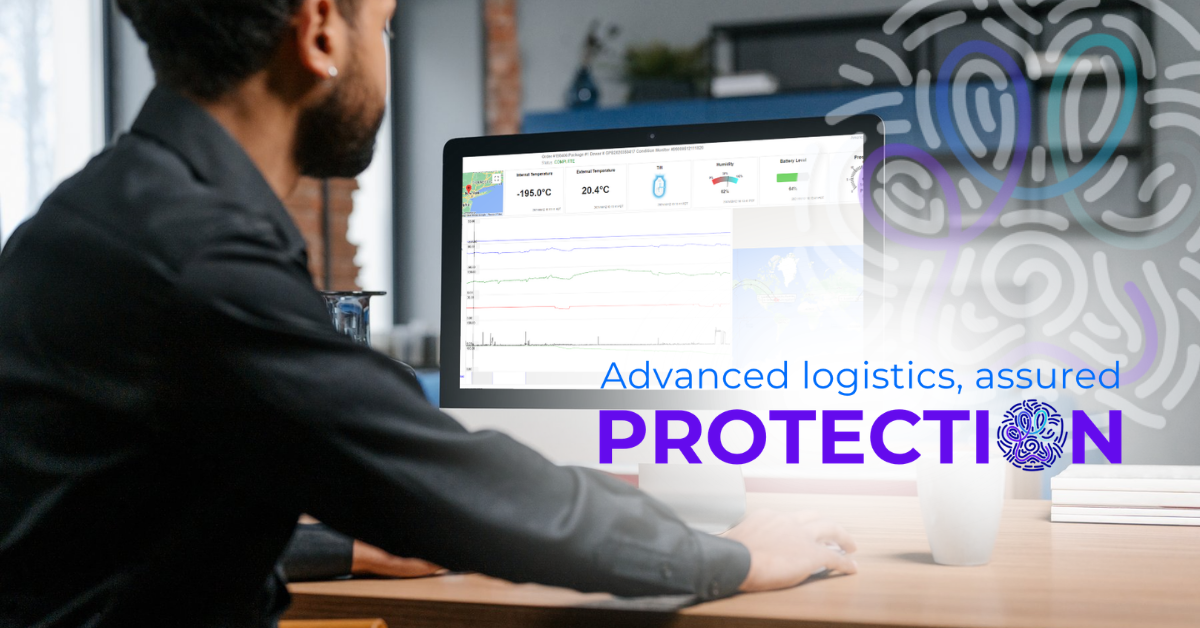
Cryoport Systems built Chain of Compliance differently. Instead of asking programs to assemble information after the fact, the traceability is created as the shipment moves. The equipment is validated to behave within defined ranges. The handling steps follow controlled procedures. The custody changes occur within a process designed to record them in a consistent way. And the environmental data is collected continuously by systems that feed directly into Cryoportal® logistics management system. Because these elements operate together, the documentation does not depend on individual habits or partner‑specific systems.
This integrated structure reduces the uncertainty that often surrounds animal health shipments handled by multiple organizations. Each transfer is recorded according to the same standard, which removes the variability that complicates investigations and slows down audits. Programs can rely on the record because the process that produced it is controlled across the entire network. That consistency is difficult to achieve when traceability is built from a mix of tools that were never intended to create a unified history.
By embedding traceability into the logistics model itself, Chain of Compliance removes the need for both small clinics and larger pharma programs to reconstruct events or cross‑reference data from separate systems. It gives them a record that reflects what actually happened, created through a process designed to support quality oversight rather than add administrative burden.
Documentation requirements in animal health logistics continue to shift toward records that can support quality decisions without additional interpretation. Programs working with temperature‑controlled or condition‑sensitive materials will have an easier time meeting those expectations when their shipment data is collected through controlled processes rather than assembled from multiple sources. A coherent custody and condition record gives quality teams the ability to evaluate impact with fewer assumptions and reduces the likelihood that an investigation will rely on secondary explanations instead of primary evidence.
Chain of Compliance supports this work by producing records that align directly with the questions quality teams face during reviews. The information is generated as the shipment moves, not reconstructed afterward, which reduces the administrative load on both internal teams and external partners. As documentation expectations continue to mature, the programs that rely on integrated, process‑driven traceability will have a clearer path through audits and a more stable foundation for long‑term operations.