Continuous Data Isn’t Optional for Animal Health
Animal health teams are moving more temperature-sensitive materials through more complex distribution networks than ever before. Vaccines, biotherapeutics, reproductive materials, diagnostics, and advanced therapies are all crossing longer distances and passing through more handoffs to reach a wider mix of farms, clinics, production facilities, and research sites. As that complexity grows, the standard for what logistics data must show is also changing. Programs are increasingly expected to document the actual condition and custody of materials throughout transit rather than rely on fragmented records assembled after delivery.
That shift has a tangible impact on shipment quality. If a product arrives late or out of specification, a carrier scan can confirm where and when a shipment was last recorded. Still, it won’t explain what happened inside the package or whether the material remained protected under changing conditions, such as weather events or transit delays. A passive indicator can confirm that an event occurred, but only after the shipment has already reached its destination, when any window to respond has long since closed. For animal health programs working with high-value or highly sensitive materials, that is a risky position.
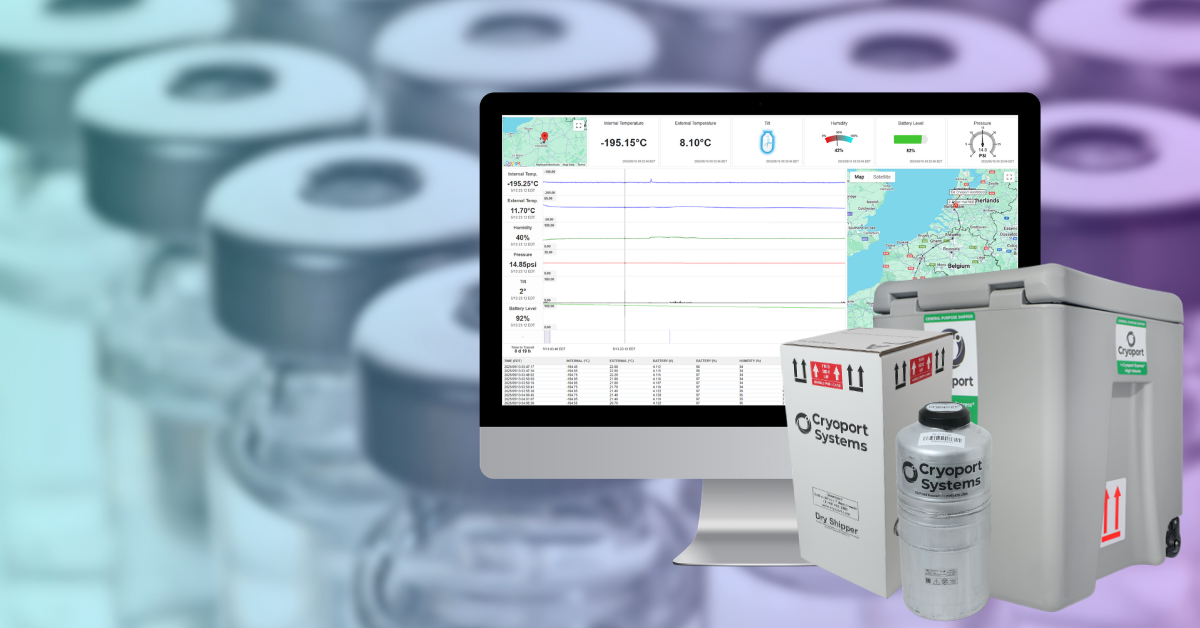
Continuous monitoring closes that gap. It gives teams an active view of shipment conditions while material is still in transit, shifting logistics from a retrospective reporting exercise into a controlled quality process. When temperature, location, orientation, humidity, shock, and other critical conditions are monitored throughout the journey, teams can address risk sooner and intervene before a preventable issue becomes a product loss or compliance problem, creating downstream impact that ripples across the program.
Delivered Doesn’t Mean Defensible
For many animal health organizations, carrier tracking still serves as the primary source of shipment visibility. That may be enough to confirm movement from one checkpoint to the next, but it falls short when quality teams need a complete, audit-ready record. A delivery scan won’t show whether a vaccine experienced a warming event at a carrier facility, and a passive temperature indicator may show that temperature drift occurred, but without the linked chain-of-custody information, it can be difficult to determine who had possession of the shipment at that moment and what corrective action was possible. These are exactly the kinds of gaps that complicate investigations and create friction during audits.
Continuous monitoring has become more than a simple convenience. Animal health regulations may still be less mature than those that govern human medicine, but the direction is clear. As advanced therapies and next-generation biologics gain traction, the expectations around documentation, traceability, and audit-ready documentation are increasing. Programs that continue to rely on disconnected systems and limited in-transit visibility are more likely to face uncertainty when questions arise.
Compliance Depends on What You Can Prove
Continuous monitoring systems capture in-transit condition data and transmit it into an integrated logistics management platform, enabling the shipment to be evaluated in context (and during transit) rather than in hindsight. If a route disruption occurs, or if environmental conditions begin moving outside of acceptable parameters, trained teams can review the data and follow established escalation protocols.
It also changes the quality record. Continuous condition data becomes powerful when it’s paired with the corresponding chain of custody, equipment history, and handling documentation. Instead of isolated, disconnected snapshots, teams have a traceable account through the full Chain of Compliance® that makes deviation assessments more credible while reducing the administrative burden of trying to reconcile mismatched records from various partners.
One of the biggest misconceptions in temperature-controlled logistics is that proving delivery is enough to support quality. It’s not. Quality and regulatory teams need evidence that the materials were handled correctly throughout transit and that environmental controls were maintained when and where they were needed. This is where continuous monitoring becomes a compliance asset just as much as an operational one. With documented condition visibility throughout the shipment journey, records speak directly to inspection questions and quality investigations. They can show the sequence of custody transfers, the performance of the shipping system, and the condition history of the material during those intervals.
The relevance of ISO 21973 is important here. The standard was introduced in 2020 to establish a structured framework for transporting human cells for therapeutic use under controlled conditions, including expectations around environmental control, traceability, equipment validation, and communication protocols. Although it was developed for human medicine, its principles apply directly to animal health shipments involving sensitive biologics and advanced therapies because the risks in transit are fundamentally similar.
Visibility is Now Part of Shipment Integrity
For animal health programs, the question is no longer whether more data would be useful. The real question is whether a program can afford to move sensitive, high-value materials without continuous condition visibility and a defensible documentation trail behind every shipment. Carrier tracking and passive indicators were never designed to meet today’s expectations for traceability, intervention, and compliance. They show pieces of the journey, but they do not show enough to manage risk with confidence.
Continuous monitoring changes that by turning shipment data into operational control and audit-ready evidence. It protects materials in transit, supports faster response when conditions shift, and gives quality teams the record they need to stand behind disposition and compliance decisions. For animal health pharma teams, vaccine producers, and veterinary networks working with sensitive products, that level of visibility is quickly becoming what shipment integrity now requires.
Cryoport Systems brings that visibility together with validated shipping systems, ISO 21973-certified processes, Chain of Compliance® traceability, and 24/7 shipment monitoring. The result is a quality-driven logistics framework built to protect product integrity and support compliance, giving animal health teams confidence that every shipment is backed by the documentation and control their programs now demand.