Consistency Matters Across Veterinary Networks
Veterinary medicine is undergoing a period of rapid transformation. Advanced therapies, specialty treatments, regenerative medicine, biologics, reproductive technologies, and increasingly sophisticated diagnostics are becoming more common across veterinary networks. At the same time, the industry is experiencing significant consolidation, with large veterinary groups and corporate organizations bringing together clinics, specialty hospitals, laboratories, and treatment centers under unified brands.
Growth creates new opportunities for veterinary organizations to deliver consistent, high-quality care across broader geographies. However, it also creates new operational challenges. As networks expand, maintaining consistency between sites becomes increasingly important. Clinical standards, treatment protocols, documentation practices, and quality systems must work together to support a unified standard of care throughout the organization.
Transportation and logistics are often overlooked in these conversations, yet they play a vital role in supporting advanced veterinary medicine. High-value biologics, reproductive materials, specialty pharmaceuticals, vaccines, diagnostic samples, and regenerative therapies frequently move between locations in support of animal care and operational workflows. As these materials become more important to veterinary medicine, logistics can no longer be treated as a separate operational function. It must be viewed as an extension of the network’s quality system. This evolution is driving a greater focus on compliance, traceability, and standardization across veterinary logistics operations.
Growth Raises the Stakes for Consistency
For a single veterinary hospital, logistics processes may appear relatively straightforward. Teams often rely on established relationships, familiar workflows, and local expertise to manage shipments. As organizations expand into multi-site networks, however, those processes become more difficult to sustain if they aren’t built to scale.
Different facilities may follow different procedures. Documentation practices may vary between locations. Individual sites may rely on different logistics providers or handling approaches. While these differences may seem manageable during routine operations, they introduce variability that becomes increasingly difficult to govern as networks grow. Similar challenges emerge in expanding animal health programs, where growth often exposes inconsistencies in processes, documentation, and oversight that were less apparent at smaller scales.
This variability creates challenges for quality teams responsible for maintaining standards across the organization. If a shipment requires investigation, or if an audit or regulatory review occurs, organizations need confidence that every site is operating under the same expectations. Compliance becomes harder to demonstrate when processes differ from clinic to clinic.
As veterinary organizations continue to adopt advanced therapies and sensitive biologics, consistency and standardization becomes a critical component of quality management.
Compliance Cannot Be Location Specific
The success of a veterinary network depends on its ability to deliver a consistent experience regardless of which location provides care.
Veterinarians, pet owners, clinicians, referring partners, and corporate leadership all expect the same standards to apply throughout the organization. Brand reputation depends on that consistency. So does confidence in the quality systems that support clinical operations.
The challenge is that compliance gaps often emerge in the transitions between facilities, systems, and partners. Documentation may exist, but it may not exist in a consistent format. Shipment monitoring may occur, but not according to standardized procedures. Records may capture individual events while failing to provide a complete picture of how materials were handled throughout transit.
Animal health organizations are increasingly facing expectations that mirror those seen across human healthcare. Programs handling sensitive biologics, vaccines, advanced therapies, and reproductive materials are under growing pressure to demonstrate traceability, process control, and defensible documentation. Organizations can no longer rely on fragmented records or isolated data points when quality decisions must be supported by evidence.
Unified standards help solve this problem. When every location follows the same procedures, uses the same qualified systems, and generates the same quality records, compliance becomes easier to manage and easier to defend. More importantly, standardized practices reduce operational risk while supporting the consistency that large veterinary clinic networks require.
Advanced Veterinary Care Requires Advanced Logistics
The veterinary industry is relying more and more on products and therapies that demand a higher level of logistical control than traditional distribution models were designed to support.
Biologics, regenerative medicine applications, vaccines, reproductive materials, specialty pharmaceuticals, and temperature-sensitive diagnostics all require careful handling throughout transportation. Environmental conditions, equipment performance, chain of custody, and shipment visibility can all influence product integrity and usability.
Historically, transportation was often viewed as a downstream function that occurred after clinical or manufacturing activities were complete. Today, that perspective is changing. Logistics is increasingly recognized as part of the overall quality framework that supports advanced therapeutic programs.
This mirrors a broader trend throughout the animal health industry. Organizations are placing greater emphasis on continuous visibility, traceability, and documentation throughout the shipment journey. Increasingly, teams are expected to demonstrate not only that a shipment arrived, but that it remained protected throughout transit and that every step can be supported by reliable records.
For veterinary networks, this shift has important implications. As advanced care becomes more common, logistics quality must scale alongside clinical capabilities. Consistent transportation practices help ensure that materials moving between hospitals, specialty centers, laboratories, and partner organizations are managed according to the same standards throughout the network.
Building a Consistent Framework for Quality
Strong logistics quality is built on standardization.
Rather than treating each shipment, location, or transportation lane as a unique process, leading organizations are moving toward unified operational frameworks that create consistency across the entire network. Standardized operating procedures, validated shipping systems, continuous monitoring, equipment qualification practices, and centralized documentation all contribute to a more controlled environment.
This approach reduces variability while simplifying oversight. Quality teams spend less time reconciling differences between locations and more time focusing on governance and continuous improvement. Standardization also creates efficiencies as networks expand because new locations can be integrated into an existing quality framework rather than developing unique processes that require separate qualification and oversight efforts. Similar benefits have been observed across large-scale animal health programs where standardized systems reduce the burden associated with requalification, documentation reviews, and regional expansion activities.
The result is greater consistency across clinics, stronger audit readiness, and a more scalable operating model capable of supporting continued growth.
How Cryoport Systems Supports Network-Wide Compliance
Cryoport Systems helps veterinary organizations establish the consistency required to support modern animal health programs through a global quality framework designed specifically for sensitive biological materials.
Unified global standard operating procedures (SOPs) provide a consistent operational foundation across locations and regions. ISO 21973-certified processes help establish disciplined approaches to transportation, documentation, traceability, and quality oversight. While ISO 21973 was originally developed for transporting human cells for therapeutic use, its principles around environmental control, equipment validation, traceability, and communication protocols are highly relevant to animal health organizations handling sensitive materials.
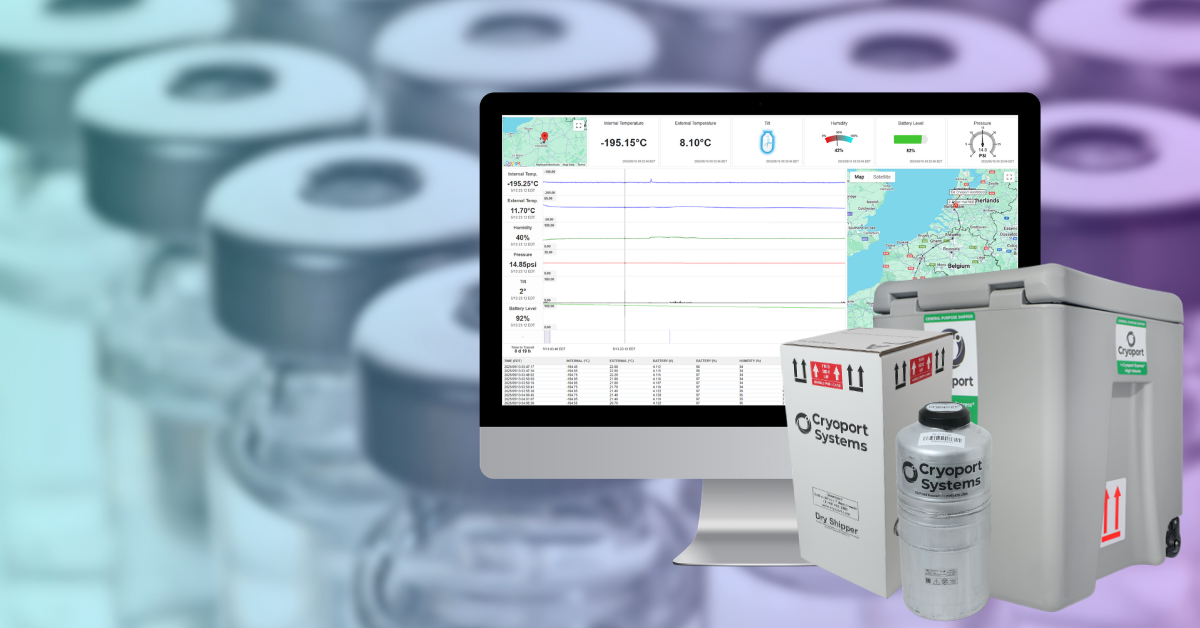
Validated shipping systems support predictable performance throughout transit, while 100% shipping system requalification helps ensure equipment is prepared and ready before each use. Continuous monitoring provides ongoing visibility into shipment conditions, generating the data needed to support informed decisions and defensible quality records.
Veri-Clean® adds another layer of protection through a validated decontamination process that supports biosecurity across shipping operations. This becomes increasingly important as materials move between veterinary hospitals, specialty centers, manufacturing facilities, and research environments.
At the center of this framework is Cryoport Systems’ proprietary Chain of Compliance®, which integrates chain of custody, chain of condition, and equipment performance data into a unified record. Rather than relying on fragmented information gathered from multiple systems, veterinary organizations gain access to a comprehensive and traceable shipment history that supports both day-to-day operations and quality oversight.
Setting a Higher Standard for Veterinary Care
Veterinary medicine continues to evolve toward more advanced therapies, specialized care models, and sophisticated delivery networks. As this transformation continues, the expectations surrounding quality, compliance, and operational control will continue to rise alongside it.
Large veterinary networks face many of the same operational pressures seen throughout human healthcare. They must maintain consistency across multiple sites, support increasingly sensitive therapies, protect their brand reputation, and demonstrate that quality standards remain intact as they grow.
Standardizing logistics quality is an important part of meeting those objectives. Consistent transportation processes help reduce risk, strengthen clinician confidence, and create the operational foundation necessary for sustainable growth.
Cryoport Systems supports that goal through ISO 21973-certified processes, validated shipping systems, Veri-Clean®, Chain of Compliance®, continuous monitoring, and a global quality framework designed to help veterinary organizations scale advanced care without sacrificing consistency. When every location operates within the same standards, compliance becomes easier to maintain, quality becomes easier to defend, and veterinary networks are better positioned to deliver the advanced care that modern animal health demands.