
Expert Q&A: Is Standardization the Bottleneck or Breakthrough to Building Scalable and Cost-Effective CGT Programs?
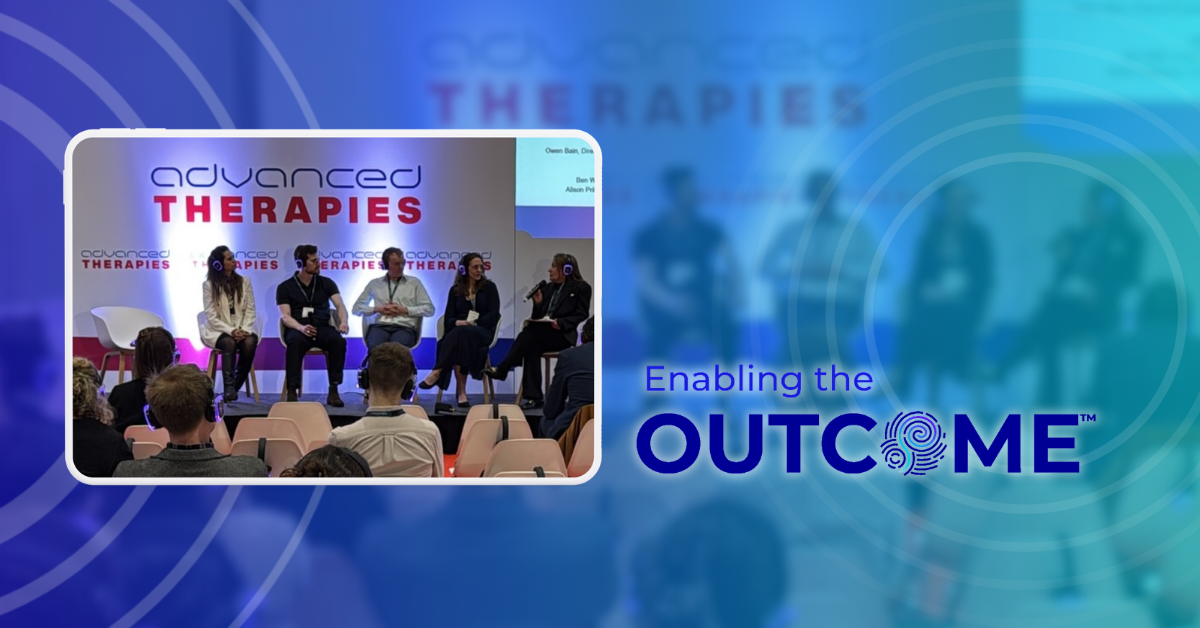
Cell and gene therapy (CGT) companies are under constant pressure to do more while hitting milestones earlier. Demonstrate manufacturability. Ensure regulatory readiness. Design for scalability and patient access. And do all of this with more constrained resources and increasingly aggressive timelines. Building on our recent panel discussion, we gathered extended perspectives from Dr. Don Fink (Dark Horse Consulting Group), Audrey Greenberg (Mayo Venture Partners), Dr. Dominic Clarke (Cryoport Systems), and Kurtis Carlisle (Cabaletta Bio).
Focus on Industrialization as much as Innovation
Early clinical success in CGT invariably feels like validation, but these early wins are often disconnected from the feasibility for your manufacturing process and therapeutic program to be industrialized. Translating breakthrough biology advancements into a material clinical product that can consistently be made the same way, every time, withstanding regulatory scrutiny and with economics that support patient access, is where many programs falter. Personalized medicine is complex, and while the science for a given program may be fundamentally sound, without operational foresight, early wins can lead to late-stage bottlenecks alongside costly resets and investor fatigue.
“The biggest blind spot is assuming that the science will carry the story. It doesn’t,” said Audrey Greenberg, emphasizing that the real risk is “translation failure [and] the inability to convert a compelling mechanism into a reproducible, regulatory-ready product.” She argued that the fix is cultural as much as it’s technical, advising developers to “Bring manufacturing and quality leadership to the table early. Design with comparability and process control in mind, not as an afterthought.”
Established early programmatic milestones can actually increase operational risk if they outpace the manufacturing capability, analytics, and documentation that must follow. The warning is clear. “It’s difficult to pinpoint ‘one’ underestimated risk across the variety of product types and indications encompassed by CGT,” Don Fink pointed out. “In a generalized sense, one common shortcoming could be the failure to fully consider the impact of early clinical success on the state of manufacturing preparedness for progression to late-stage clinical development.”
“A strong translational operations plan is the best insurance policy you can buy against future capital burn and regulatory resets,” Audrey added, to which Don agreed, suggesting innovators should ponder questions such as, “What process changes will need to be introduced (and their timing) to sustain the continuity of clinical development? Prospectively plan for eventualities rather than play catch-up when necessity demands.”
The hinge point often hides in the strategic approach to starting material selection. Using fresh leukapheresis might feel simpler when handling at small scale, but it becomes a structural limitation the moment you expand across sites and geographies. As Dominic Clarke put it, “Relying on the use of fresh leukapheresis is not a scalable solution. This approach leads to vulnerabilities or cracks in the workflow. To minimize operational bottlenecks, product variability, and regulatory exposure, validated workflows that include standardized cryopreservation should be implemented.”
Kurtis Carlisle reinforced that the operational reality from the sponsor side is straightforward, pointing out that “processes must be flexible by design, with unbroken data and identity control across sites. Otherwise, success turns into congestion and variability as throughput grows.”
Industrialization is a design principle as much as it’s a downstream activity. Embedding manufacturing, quality, and data leadership early, proactively planning the process changes necessary to support clinical development, and removing avoidable variability by adopting standardized cryopreservation workflows at an early stage will naturally create durable momentum. Furthermore, this momentum will be supported by successful demonstration of comparability, reinforcing regulatory confidence and building a path to scale that doesn’t crack under pressure.
Scalability and Lifecycle Planning Should Begin Earlier Than You Think
If achieving manufacturing scale is the long-term ambition, consistency and economics are the pressure test. Scalability in CGT does envelop producing more product, but it also requires the element of predictability and at a cost profile that payers will accept, all while meeting evolving regulatory expectations attributable to accumulation of precedent experience. Successful programs are those that treat scalability and lifecycle management as first-order constraints from day one, intentionally designing them into an overall IND strategy rather than bolting them on after product approval.
Audrey reframed scalability as a three-vector alignment problem. “Scalability isn’t just about producing more batches,” she pointed out, “it’s about producing them consistently and economically under the eye of regulators and payers. To me, scalability is the intersection of biology, engineering, and finance.” Specifically, these three vectors require proactive alignment. “Process predictability [requires] yield, viability, and cycle time under control. Data integrity [requires] traceability and real-time analytics across the chain. and Economic logic [requires] a cost-of-goods trajectory that supports access.”
Achieving alignment, however, depends on prospective product lifecycle foresight. Audrey urged teams to move planning upstream, saying, “We need to stop treating lifecycle planning as a post-approval problem. The most sophisticated CGT companies are building lifecycle models right alongside their INDs, mapping where they’ll need comparability data, how digital systems will capture it, and how manufacturing changes will be justified. That foresight pays off. Post-approval changes are expensive because the groundwork for flexibility wasn’t laid early. Build adaptability into your regulatory filings; think of it as pre-negotiating future innovation.”
Don agreed, offering a practical mechanism that enables post-approval innovation without re-litigating safety and effectiveness every time. “[My] opinion?” he said, “Go to licensure with a commercial process that possesses flexibilities necessary to introduce post-approval changes in a pre-planned manner, having forecast the necessity for introducing manufacturing changes.”
Product preservation strategy is part of that lifecycle design. Dominic connected scalability directly to cryopreservation, saying, “Cryopreservation provides a controlled, validated approach that maintains cell integrity and functionality while enabling flexible scheduling and centralized quality oversight.”
And if future-state strategies like cryopreservation haven’t been part of initial planning and first regulatory filings, Don pointed out the power of proactively anticipating how things might change and building in strategies to manage programmatic shifting prompted by real-world needs as programs scale. “Also have a manufacturing change comparability protocol evaluated during the BLA/MAA review such that it is approved upon licensure, earning agreement with regulatory authorities that will maximize the likelihood for pre/post-change comparability to be achieved without requiring additional clinical evaluation,” he recommended.
Planning for scale, Kurtis highlighted, means taking into account both where you are now and where you plan to be going forward. “Operationally,” he pointed out, “sponsors benefit from right-sized systems. Lean for Phase I but architected to expand without wholesale revalidation when sites and throughputs increase. Electronic batch records and pre-planned comparability pathways, for example, preserve both speed and control simultaneously.”
For the most robust path forward, developers need to treat scalability and lifecycle management as non-negotiable design constraints at early IND stages. Effective planning for the future state, which takes into consideration process predictability, pre-approved comparability protocols, and economical COGs trajectories (including standardized cryopreservation of critical starting materials), keeps options open and sustains flexibility as the program grows.
Integration as a Performance and Compliance Multiplier
In biopharma broadly, but especially in CGT, inclusive of autologous therapies, fragmentation is the enemy of scale. A fragmented approach across collection, cryopreservation, manufacturing support, logistics, data, and documentation creates roadblocks such as variability and timeline delays (and, ultimately, increased cost). An integrated approach reduces operational noise while simplifying validation and comparability. Done well, it aligns process engineering with quality and analytics, addressing them through a common language and unified standards.
Audrey captured the strategic effect succinctly, stating, “Integration is the quiet superpower of this industry. A well-integrated chain from collection through cryopreservation to delivery cuts variability, simplifies validation, and accelerates comparability exercises.”
For regulators, integration also improves trust, Kurtis pointed out. “Integration builds confidence because data flow is continuous and auditable. For sponsors, this lowers their operational burden and burn rate. True integration means every function, from process engineers to quality leads, speaks a common language.”
At the operational level, Dominic described an integrated cold-chain program as a harmonized system that starts with the end in mind, bringing together standardized SOPs for cryopreservation, packaging, labeling, and handling across sites, validated equipment, tightly coordinated logistics with redundancy and contingency planning, and harmonized documentation that stands up globally, all of which is supported by digital platforms that consolidate data derived from all stakeholders into a single dashboard. Continuous monitoring across temperature, location, condition, and the full Chain of Compliance® is the foundation upon which visibility and action are built.
Sponsors feel the impact directly. “Integrated execution,” Kurtis emphasized, “removes risky handoffs and ambiguity, leading directly to cleaner audit trails and faster issue resolution. The result is fewer deviations and a stronger comparability narrative, alongside lower total cost of control.”
At the end of the day, integration is a force multiplier. Establishing unified standards across the value chain and unifying fragmented vendor networks into single-vendor relationships wherever possible results in predictability you can scale.
Standardized Cryopreservation Reduces Variability and Unlocks Scale
Cryopreservation of leukapheresis-derived starting materials is where science becomes scalable, when done with intention and in a standardized way. This critical starting material is one of the most sensitive areas of the autologous CGT workflow, as fresh leukapheresis collections need to be processed and manufactured within a very tight window of time, ideally within 48 hours of acquisition. This introduces numerous challenges across processes, from the logistics of moving collected materials to the time constraints and coordination required to match collection windows with manufacturing slot availability. Cryopreservation addresses many of these common issues, removing roadblocks that frequently interfere with achieving true scalability, especially for global commercialization performed at scale. Still, small inconsistencies in cryopreservation can translate to big problems.
Without consistency and standardization in how susceptible biologic materials are handled, formulated, cooled, thawed, and stored, viability and product potency could become unpredictable, comparability packages get complicated, and multi-site trials quickly become at-risk for generating inconsistent clinical results. A standardized, automated approach to cryopreservation is one of the highest-leverage decisions a sponsor can make to stabilize overall product quality and enable manufacturing process scaling.
Dominic laid out the stakes and the solution. “Cryopreservation involves multiple sensitive parameters. If these vary by site, [critical parameters like] cell viability, potency, and functionality can differ significantly. Standardization ensures these variables are controlled uniformly, reducing batch-to-batch and site-to-site differences.”
“[This] is essential for maintaining product quality and reproducibility,” Dominic continued. “Harmonization of critical parameters, including starting material processing, cryoprotectant formulation and concentration, controlled-rate cooling profiles, and ultra-low temperature storage conditions, minimizes inter-site variability in post-thaw cell viability, potency, and functional attributes. This process uniformly reduces risk, enhances manufacturing and predictability of therapeutic performance, facilitates regulatory alignment, and offers robust comparability across trials.”
From the perspective of outcomes and economics, Audrey added, “Cryopreservation is where science meets logistics. When sites freeze under standardized conditions, you control a major source of biological noise. Variability in cooling rate or thaw time translates directly into potency risk.”
“Standardization,” Audrey continued, “means you can compare apples-to-apples across sites, trials, and time points. It also builds regulatory confidence because your comparability package is rooted in controlled data. It’s one of the highest-ROI decisions a sponsor can make.”
Automation is the engine that makes standardization stick, Dominic reinforced, saying, “Implementing a standardized, automated cryopreservation workflow is critical to reducing variability and mitigating risks associated with manual processing or site-specific practices.”
For sponsors, the operational benefit is pivotal. As Kurtis pointed out, “Cryopreservation decouples collection from manufacturing, enabling predictable scheduling across geographies and removing the ‘race against the clock,’ which is a central risk in autologous programs at scale.”
Treating cryopreservation as a core CMC design decision, standardizing and automating it early, stabilizes potency and maintains viability while strengthening comparability. This creates the operational flexibility required for multi-site trials and global commercialization.
Delivering Cost Efficiency through Convergence
Achieving efficiency without compromising compliance requires doing less reinvention and focusing more on the benefits of convergence. Agreeing on common frameworks, leveraging what has already been proven, and partnering with integrated providers reduces fragmentation across the entire supply chain, shrinking both timelines and the total cost of ownership.
Audrey urged pre-competitive collaboration, saying, “We spend too much time reinventing quality systems that could be modularized. Common frameworks for cryopreservation, chain-of-identity, and potency testing would save every sponsor time and money.”
“The challenge isn’t technical,” she pointed out, “it’s ego. If the sector can collaborate on standards the way biopharma did for monoclonal antibodies, we’ll make CGT truly global and sustainable.”
Don agreed, pointing to the benefit of adopting architectures that are already vetted. “Pursue development of widely-recognized frameworks for product manufacturing that are premised on commercial successes,” he recommended. “As with CAR-T products, recombinant monoclonal antibodies and therapeutic proteins, and gene-delivery vectors, there exist well-characterized manufacturing processes that readily apply across products of the same type. Each of these exists in a state of regulatory compliance.”
“Adopting known successful manufacturing processes or adapting a process to be more representative of a vetted, established process could shorten timelines,” Don highlighted. Dominic agreed, pointing to the operational advantages of integrated providers. “There’s a built-in expertise, reduced fragmentation, unified quality system, and enhanced efficiencies, all leading to gains in efficiencies and cost,” he emphasized.
At a practical level, Kurtis agreed, sponsors can start with right-sized digital investments. “Interoperable records, disciplined SOPs, robust audit trails… all mitigate compliance risk without overspending, and scale cleanly into broader systems as throughput grows,” he added.
Choosing convergence over bespoke solutions enables standardization where the science allows. To plan for scale, developers can adopt proven frameworks to accelerate validation and should consider partnering with integrated providers to compress the tech transfer process, bringing together the end-to-end supply chain within a single quality and documentation system, all while maintaining regulatory compliance, leading to expanded patient access.
Practical Guidance for Teams at the Starting Line
The most durable development programs align science with systems and economics from day one. But what does this mean in practical terms? Design for executing comparability, data credibility, and payer-recognized outcomes. Pre-planning for change. And build an operational foundation that scales cleanly.
“Start with the end in mind,” Audrey summarized, “[with] a process that scales, data that regulators trust, and results that payers will reward. And it’s just very simple, build for comparability and outcomes from day one.”
“Keep the end of the journey in mind when you start,” Don agreed, “and this incorporates key decisions… you want to have a sense for all of that, as well as your timing for agreement with [the] FDA, particularly on potency assurance.”
Dominic focused on execution, saying, “Build in integrated solutions wherever possible to harmonize and streamline operations across the entire value chain.” Kurtis built on this, saying, “Operationally, plan for scale earlier than feels comfortable. The data structures, SOPs, and partner choices you make in Phase I either accelerate you later or force costly resets.”
CGT leadership now demands so much more than novel science. The true differentiator is operational credibility, with proven processes that scale, data that regulators trust, and well-developed economics that payers can reward. The path forward requires that industrialization is designed from the outset, with an integrated value chain and standardized steps that address variability. As Audrey captured the winning posture, “The companies that win are those that can say ‘Our biology works, our process scales, and our economics make sense.’”
If you’re ready to standardize cryopreservation, integrate your workflows, and strengthen your end-to-end supply chain, Cryoport Systems can help you future-proof your program, designing for flexibility and resilience throughout the product lifecycle from pre-clinical through global commercialization.