Streamline Cell Therapy Operations by Reducing Requalification
Advancing a cell therapy program into late-stage clinical development is an exciting milestone, but operationally complex. As organizations prepare to expand manufacturing capacity or onboard additional clinical sites, scaling operationally can be just as demanding as advancing the science.
One of the most overlooked obstacles is requalification. While qualification activities are a necessary component of maintaining quality and regulatory compliance, repeated requalification events consume significant time and budget. Each new site, vendor or process variation can trigger requalification activities such as comparability assessments, method transfers, equipment qualification, raw material equivalency evaluations, and documentation updates. Straightforward expansion efforts can quickly become a series of validation exercises and cross-functional reviews that extend timelines and increases costs.
For teams already balancing clinical timelines and manufacturing readiness, these demands can create obstacles right when programs need to move quickly.
The Burden of Growth
Requalification rarely receives the same level of attention as manufacturing scale-up or clinical expansion during strategic planning discussions, but it’s one of the biggest operational drains as programs mature. Every new manufacturing site, every additional vendor, and every process variation introduces the possibility that teams will need to demonstrate comparability, consistency, and control. Even when the process itself remains unchanged, introducing a new location or operational partner requires evidence that outcomes will remain equivalent.
A company expanding from a single manufacturing facility to multiple facilities may repeatedly validate aspects of a process that have already been proven elsewhere. Likewise, adding clinical sites across new regions can create additional quality and compliance requirements that demand time and attention from technical operations and quality teams.
Many times, these efforts are driven by the introduction of variability.
Why Variability Triggers Requalification
Requalification is a response to uncertainty. When critical inputs to a process change, organizations must demonstrate that the changes will not affect product quality or performance.
In cell therapy programs, this often stems from the use of fresh starting material. Material may arrive with differences in timing, handling conditions, transportation routes, or site-specific procedures. As organizations expand geographically, these variables can become increasingly difficult to control. What begins as a manageable process at a single site can become far more complicated across multiple manufacturing locations and clinical centers. Each new point in the network introduces opportunities for variation, which may, in turn, lead to additional qualification requirements.
As a result, teams often find themselves managing complex operations long before manufacturing even begins.
Starting With Consistent Starting Material
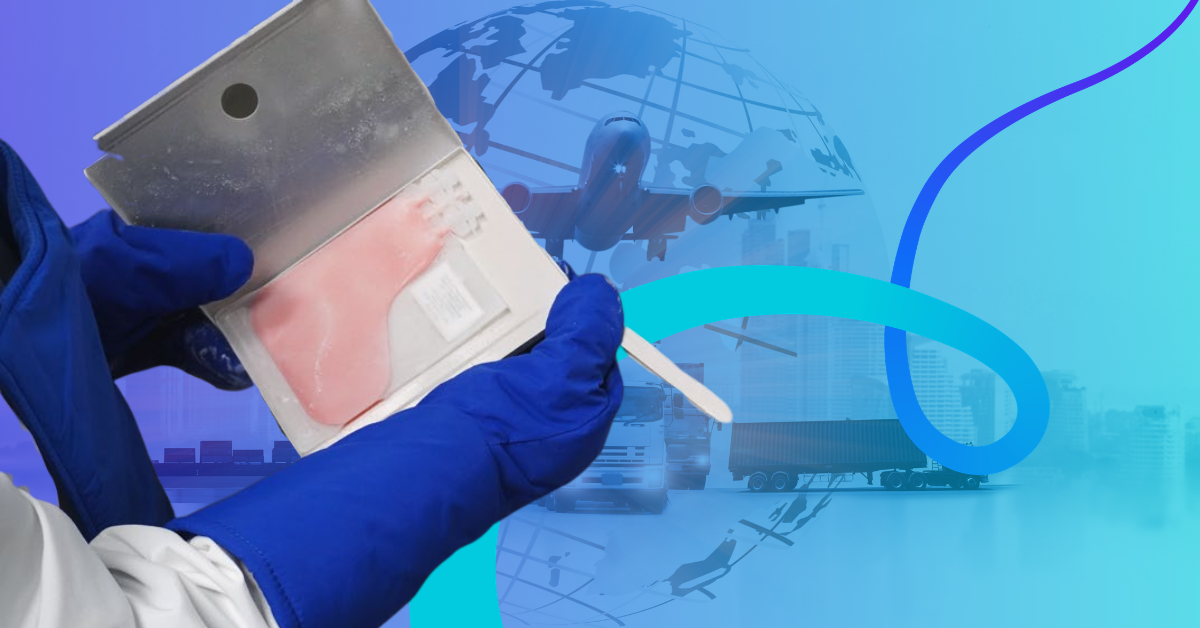
Consistency at the start of the process is an effective way to reduce downstream complexity. Cryopreservation allows organizations to establish standardized starting material that can be stored and distributed according to controlled procedures. Rather than relying on fresh material that must move through tightly coordinated timelines, cryopreserved material creates greater flexibility for manufacturing.
When manufacturing sites begin with material prepared under the same controlled conditions, there are fewer variables to account for as processes are introduced into new facilities. Development and MSAT teams can focus on transferring the process itself rather than spending valuable time addressing differences introduced upstream.
As manufacturing networks expand and prepare for long-term growth, maintaining consistency becomes increasingly important. Standardized frozen starting material helps create a common baseline across locations, reducing operational uncertainty and supporting more predictable outcomes.
Simplifying Process Transfer
Process transfer represents one of the most critical steps on the path to commercialization. Successfully establishing a process at a new manufacturing site requires confidence that the same procedures will deliver the same results.
When starting materials vary, demonstrating that consistency becomes more challenging. Additional studies and qualification activities may be needed to confirm that observed differences are not affecting process performance.
Conversely, when organizations begin with a standardized cryopreserved starting material, the transfer process can become significantly more straightforward. Consistency at the front end helps support consistency throughout the manufacturing workflow, reducing the number of variables that must be evaluated and documented. While qualification activities remain necessary, they become more focused and manageable because teams are working from a stable operational foundation.
For organizations looking to scale efficiently, this distinction can significantly affect timelines and resource allocation.
Expanding Clinical Footprints With Greater Confidence
Manufacturing is only one side of the scaling equation. Clinical expansion introduces its own set of operational demands. As studies move into pivotal, sponsors add treatment sites to reach broader patient populations and support enrollment goals. Every new site must be integrated into established workflows while maintaining compliance and operational consistency.
Without standardization, this expansion can create additional opportunities for variation. Site-specific practices, differing levels of operational experience, and localized procedures may all contribute to increased complexity. Over time, these differences can lead to validation and qualification activities that slow progress and place additional strain on already busy teams.
A standardized cryopreservation strategy helps address these challenges by creating greater consistency across the network. When sites operate within a common framework supported by validated procedures and established quality systems, onboarding becomes more predictable, and operational execution becomes easier to scale.
The Power of an Integrated Approach
Reducing requalification burden is not simply about controlling starting material. It also requires operational alignment throughout the therapy lifecycle.
Many organizations rely on multiple vendors to support collection, cryopreservation, storage, logistics, and manufacturing-related activities. While each provider may perform its individual role effectively, every handoff introduces another opportunity for variability. Additional interfaces often entail additional documentation requirements, oversight responsibilities, and qualification considerations.
An integrated operational model minimizes these challenges by creating consistency across the entire workflow. When procedures, quality systems, and operational practices are aligned, organizations know that activities will be executed consistently regardless of location or stage of development.
This becomes particularly valuable as programs transition from regional clinical studies to larger global operations. The complexity of a growing network does not disappear; rather, it becomes significantly more manageable when supported by a unified infrastructure.
Building for Scale Without Continuous Requalification
As cell therapy programs advance toward commercialization, operational simplicity becomes a competitive advantage. Every hour spent managing unnecessary qualification activities is time that cannot be spent preparing for launch or supporting patients.
While some level of qualification will always be required in a highly regulated industry, organizations can take steps to reduce the need for repeated requalification driven by preventable variability. Standardized frozen starting material provides a foundation by creating consistency at the earliest stages of the process. When paired with an integrated operational ecosystem, that consistency can extend across manufacturing sites and clinical locations.
Through IntegriCell® cryopreservation services and the broader Cryoport Systems platform, therapy developers gain access to the infrastructure, standardized workflows, and quality-focused operational support needed to scale confidently. The result is a more predictable path forward that enables growth without introducing unnecessary operational disruption.
As organizations prepare for expansion, the real question is whether the systems supporting the program are designed to prevent that complexity from turning into a cycle of ongoing requalification. With the right approach, growth can remain focused on advancing therapies rather than managing avoidable operational burdens.