
Lane Qualification Reduces Risk Before Shipments Move
Animal health biopharmaceutical programs put pressure on logistics networks in ways that standard route planning doesn’t always capture. Vaccines may move in defined seasonal windows, while monoclonal antibodies (mAbs), cell-based therapies, biologics, and other sensitive materials may move through channels with different timing constraints. Some shipments are tied to manufacturing release, others are tied to clinical study schedules, and still others are fitting into regional disease control programs or veterinary network demand.
Across these use cases, route selection has to be treated as part of the control strategy. The selected lane determines how long a shipment may sit at an origin facility, what airport(s) it moves through, which carrier handles each segment, how customs clearance is managed, and how much environmental exposure the package may encounter before it reaches the receiving site. Those conditions can vary meaningfully by season and geography, by carrier capacity, and even by local handling practices.
Lane qualification addresses that variability before live product is placed at risk. It gives teams documented evidence that a route can perform within defined expectations under the conditions the program is likely to face.
Animal health programs expose weak assumptions in route planning
Many animal health biopharmaceutical or vaccine programs are planned well ahead of distribution, but the actual shipping window could be narrow. Seasonal vaccine demand can concentrate around a disease cycle or regional outbreak response, or biopharmaceutical shipments may be constrained by manufacturing release, clinical study enrollment, or even site readiness. In any of these cases, unexpected delays could impact downstream operations and product availability.
Transit time is one of the first assumptions that should be scrutinized. Carrier-provided timelines rarely capture the full operational picture for temperature-sensitive shipments, and environmental conditions could add another layer of consideration, especially in cases where weather could create transit delays. International shipments create further complexity to account for customs clearance and inspection practices that can vary by country, port, product classification, and documentation.
The purpose of lane qualification is to make these conditions visible. It identifies where the risk sits, how much variability the lane has shown, and what controls are needed before the route is implemented in clinical or commercial scale.
A qualified lane is built around evidence, not preference
Teams may default to a given shipping lane because it is fast, or even because it’s familiar. But when you’re moving temperature-sensitive animal health products like advanced therapies, next-generation vaccines, or biologics, shipping lanes should have documented, established suitability.
A qualified lane begins with a defined shipping profile that includes origin and destination, product temperature requirements, packaging configuration, expected transit duration, carrier handoffs, customs touchpoints, receiving procedures, and escalation paths. The route is then assessed against practical, real-world operating conditions.
The assessment should consider historical performance where data is available. Repeated delays at a particular airport, for example, might make an otherwise ideal (on paper) lane unsuitable for a high-volume program or for time-sensitive shipments. Testing under representative conditions is where assumptions become measurable. By performing dry runs, pilot shipments, or qualification shipments, it becomes possible to demonstrate with certainty whether the selected packaging system, route, carrier process, and monitoring approach work together as expected. The value is in the full shipment record. Temperature data matters, but so do transit timestamps, dwell time, route deviations, custody events, and any discrepancy between planned and actual handling.
A lane should not be considered qualified simply because a single shipment arrived in range. The qualification package needs to show that the route has been evaluated against the intended use of the program. For seasonal vaccine distribution, that may mean testing during the same weather and capacity period expected during live shipments. For broader biopharmaceutical programs, it can mean confirming that the lane supports the product’s stability profile and site-level handling constraints.
Temperature control depends on handoffs as much as packaging
Validated packaging is essential, but packaging alone cannot compensate for an uncontrolled route. The best package design still operates within defined assumptions for duration, payload, conditioning, ambient exposure, and handling.
Handoffs are often where lane risk becomes visible. While a shipment may leave the origin facility correctly packed and documented, if it later encounters a missed connection or unplanned hold, that could consume much of the qualified duration. If the shipment is continuously monitored, the team can see whether the shipment is approaching a defined threshold. And if the escalation process is also defined, it becomes possible to intervene before the shipment becomes unrecoverable.
This is why lane qualification should include contingency planning. Teams need to know in advance which alternative routing options are acceptable, who has the authority to approve a route change, and what documentation is required when the shipment deviates from the planned route. These decisions are difficult to make cleanly during an active excursion, but are easier to govern when the acceptable actions have already been documented and aligned with quality expectations.
For regulated animal health products in particular, the documentation burden matters. A shipment that arrives within range but isn’t accompanied by a clear chain of custody, complete temperature record, or documented explanation for a route change can still create review or audit issues.
Regulatory and quality teams need lane history before release pressure
Regulatory and quality teams are often asked to evaluate logistics risk under time pressure. This is not the moment to discover that the route has limited performance history or incomplete assumptions or deviation procedures.
A qualified lane gives teams a stronger basis for review. The documentation should describe why the route was selected, how it was tested, what acceptance criteria were applied, what results were observed, and which controls will govern live shipments. When a program expands into new geographic regions or countries, the same method can be applied to qualifying additional shipping lanes and proactively mitigating common risks of expanding programs.
Audit readiness depends on that consistency. Inspectors and internal reviewers generally expect to see that transport conditions were controlled and monitored. They also expect documented rationale when a lane changes or a deviation occurs. A mature lane qualification process gives the organization a defensible record of decision-making before shipments move.
This is especially important for animal health programs involving multiple product types, markets, and even receiving locations. A vaccine program serving veterinary networks may have different constraints than a biologic moving to a CRO or diagnostic laboratory. The qualification record helps separate routine lane behavior from abnormal events, which can make all the difference when teams are evaluating whether a shipment can be accepted or whether the lane should be revised before the next shipment wave.
Where Cryoport Systems supports animal health programs with the qualification process
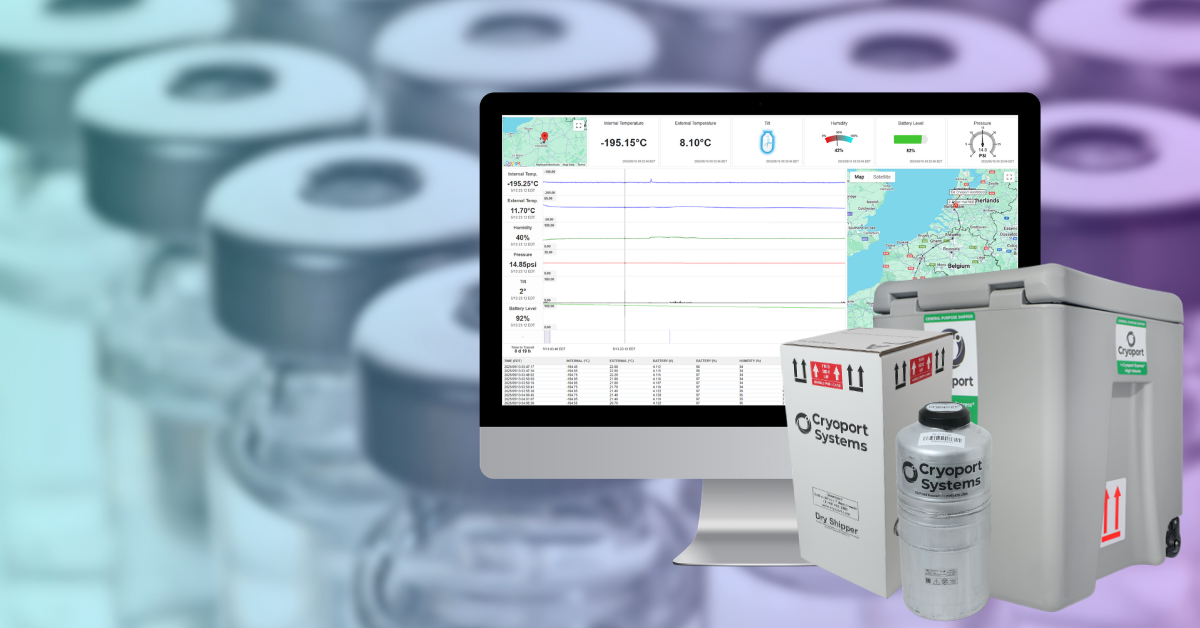
Cryoport Systems supports lane qualification as part of a broader temperature-controlled logistics strategy for animal health vaccines and biopharmaceuticals. This includes lane mapping, route risk assessment, carrier and airport assessment, packaging validation alignment, pilot shipment execution, continuous monitoring, and documentation to support quality and regulatory review.
For animal health programs, the practical value is in connecting these activities within one controlled process. A lane can be selected based on operational feasibility, seasonality, regulatory requirements, product sensitivity, and shipment criticality. It can then be tested through simulation and live pilots to evaluate performance against critical parameters from pickup through delivery.
Cryoport Systems also supports ongoing lane review. A lane that performed well during one program phase can be reassessed if something changes, and additional lanes can be evaluated as programs expand and new sites and geographies open up.
This approach is supported by ISO 21973-certified processes, validated shipping systems, and integrated continuous monitoring. For quality teams, the deliverable is a route network with defined controls and records, while logistics teams gain the reassurance of a practical operating model for moving sensitive products across domestic and international shipping lanes with dependable, documented performance.
A qualified lane should leave little ambiguity for the people responsible for the shipment at every stage. The route should be documented, and the packaging and monitoring approach matched to the product and transit profile. The escalation path should be usable during an active shipment.
That level of control matters, especially as animal health logistics scale under pressure. Lane qualification gives teams a way to make decisions before shipments are in motion, creating a documented route network that can be reviewed and adjusted as conditions change. For temperature-sensitive animal vaccines and biopharmaceuticals, that discipline supports scale within a controlled distribution process that remains audit-ready while minimizing risk.