ATC 2026 Keynote Recap: Building Global Readiness for Advanced Therapies
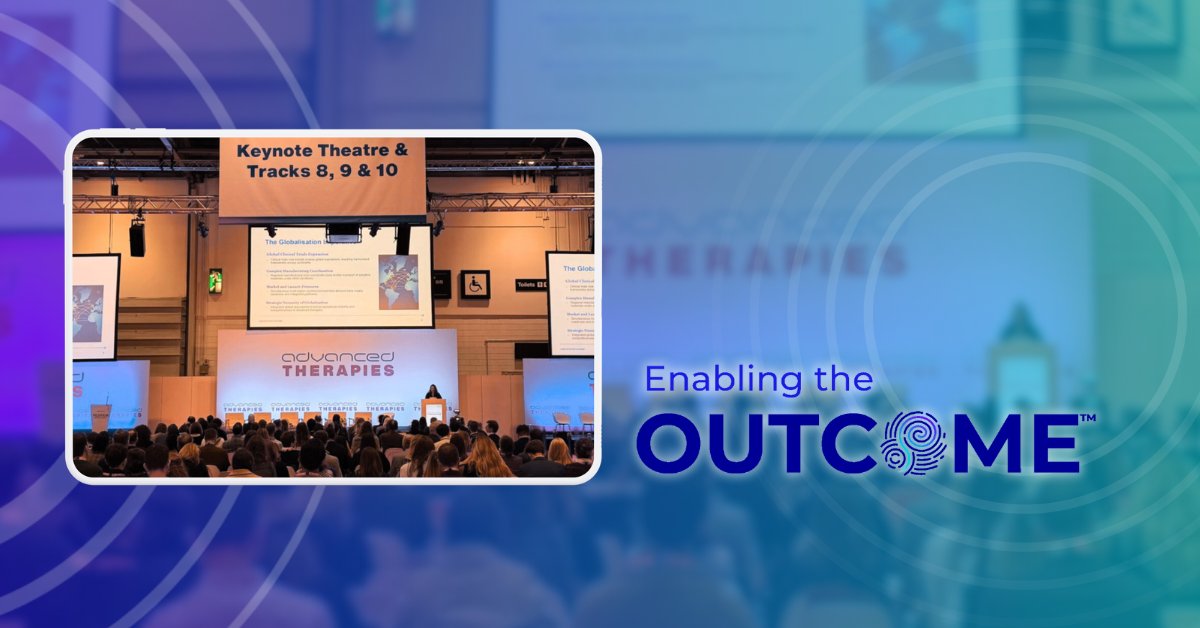
Alison Pritchard, VP of Business Development – EMEA at Cryoport Systems, delivered the Keynote Address at the Advanced Therapies Congress 2026, grounding the discussion in the accelerating pace of global expansion across the cell and gene therapy industry. Clinical trials now commonly stretch across regions, and manufacturing networks are distributed in ways that require constant coordination. These patterns have become the norm rather than the exception. As she described it, the operating environment for advanced therapies has already become global, and every program is expected to function within that reality much earlier than in the past.
As therapies move across borders, the demands placed on supply chains inevitably increase. Materials must maintain their integrity through longer routes and more varied handling conditions. Regulatory expectations grow accordingly, because agencies examine how consistently a process performs across different geographies. Most importantly, life-changing therapies reach more patients in more places. Alison emphasized that this shift reflects what regulators and investors have consistently observed across the industry: operating frameworks that perform well locally can become strained when forced to operate on a global scale.
Where Fragmentation Emerges
A central theme in the keynote was the impact of fragmentation. Programs rarely set out with an intention to build a fragmented model. Instead, breakdowns tend to emerge gradually as organizations respond to immediate needs at different points in development, when a site adopts its own handling practices or a regional vendor follows a different workflow or uses a separate data system that is disconnected from the next step downstream. Each decision is entirely reasonable on its own, but these differences accumulate over time.
Alison noted that this accumulation becomes more visible as programs operate internationally. Variations that don’t matter at one site can influence performance when multiplied across many different partners and regions. The result is an ecosystem that can be difficult to interpret and even harder to maintain in a predictable state. Her message was that scientific progress alone cannot offset the operational strain created by these mismatches.
The Case for Early Integration
To counter fragmentation, Alison underscored the importance of integrating supply chain design early in the development process. This provides an opportunity to establish a consistent foundation before expansion introduces additional complexity. Early integration enables teams to understand the regulatory implications of operating across multiple regions, plan for the movement of temperature-sensitive materials, and put in place intentional workflows that scale without repeated redesign.
When these considerations are incorporated from the earliest stages, the operational model grows more uniformly. Programs can avoid operational debt that often arises later, when inconsistencies need to be reconciled during regulatory review or commercial planning. Alison framed early integration as a form of operational preparedness that supports scientific intent rather than constraining it.
The Move Toward Connected Systems
Alison also highlighted a noticeable shift across the industry toward more connected operating models. Many organizations have begun consolidating functions like logistics, cryopreservation, biostorage, kitting, clinical sample management, and digital systems into cohesive environments. This end-to-end approach to an integrated supply chain provides teams with a clearer understanding of how materials move and where potential issues may arise.
This type of visibility changes how programs operate. Instead of responding to disruptions as they occur, teams can identify conditions that may pose a risk and address them before they disrupt therapeutic progress. Alison described this evolution as a natural progression for a field that depends on precise coordination and reliable performance at every step. Integrated environments allow the program to behave with greater stability as scale increases.
Why Standardization Matters
Standardization was a key highlight. Integration creates connections, but standardization ensures they hold under pressure. When processes, equipment, and documentation remain consistent across regions, variability decreases. That reduction in variability supports predictable performance, which, in turn, strengthens regulatory interactions and the daily operations of the supply chain.
Alison explained that standardization is not a limiting concept. It gives programs the ability to grow without introducing new degrees of operational noise each time a site or region comes online. Consistency becomes a stabilizing force that supports scale.
A Supply Chain System that Supports Every Stakeholder
Throughout the keynote, Alison returned to the idea that stronger supply chain integrations benefit every participant in the therapeutic journey. Manufacturing partners gain a more reliable environment with fewer unexpected deviations. Clinical sites experience clearer workflows that reduce confusion and improve efficiency. Sponsors gain visibility into operations that often become opaque once multiple regions and vendors are involved.
The common thread is the reduction of friction. When the system holds together as a coherent whole, programs move with greater confidence from development toward broader global deployment.
Alison closed with a perspective on where the field is heading. The future she described is defined by fully connected global platforms and manufacturing networks, alongside data environments that allow the supply chain to respond in real time to changing conditions. Reaching that future requires early preparation rather than retrospective correction. But the direction is clear, and many of the elements needed to support that future already exist.
She ended with a reminder that every operational decision ultimately shapes a patient’s access to therapy. Global readiness is not only an operational goal. It is the foundation that allows the science to reach the people it’s designed to serve.