
Animal Health Archives

Animal Pharmaceuticals
10/20/2026
Commercial Readiness Starts with an Audit-Ready Supply Chain
The animal health industry is evolving rapidly. Biologics, vaccines, reproductive technologies, regenerative medicine applications, and other advanced therapies are reaching important commercial milestones and expanding into broader distribution networks. As organizations move beyond clinical development and pilot programs, they often discover that commercialization requires more than increased production capacity. It demands a supply chain capable of delivering consistency, traceability, and compliance at scale.
Animal Pharmaceuticals
09/16/2026
Consistency Matters Across Veterinary Networks
Veterinary medicine is undergoing a period of rapid transformation. Advanced therapies, specialty treatments, regenerative medicine, biologics, reproductive technologies, and increasingly sophisticated diagnostics are becoming more common across veterinary networks. At the same time, the industry is experiencing significant consolidation, with large veterinary groups and corporate organizations bringing together clinics, specialty hospitals, laboratories, and treatment centers under unified brands.
Supply Chain
09/16/2026
Integrated Services That Pass Inspections
An upcoming audit or inspection can be a stressful event. Most sponsors have their documents and processes in place, but in the audit scenario, the question becomes whether teams can defend these processes. From the supply chain management side, it’s about producing evidence that demonstrates control across every site and handoff. Regulators expect documented processes, validated systems, qualified transportation lanes, and complete chain-of-custody and chain-of-condition records. They also expect quality to be built into daily operations, not reconstructed in the weeks leading up to an inspection.
Animal Pharmaceuticals
08/03/2026
Global Expansion Starts with Global Consistency
Expanding a global presence has become a strategic necessity for animal health organizations. New markets, manufacturing sites, distribution partners, and veterinary networks create opportunities to expand programs across regions. The challenge is not reaching those regions. The challenge is maintaining the same quality standards, operational controls, visibility, and compliance readiness everywhere a program operates.
Animal Pharmaceuticals
07/07/2026
Scaling Animal Health Programs Shouldn’t Mean Requalifying Your Supply Chain
Animal health programs tend to reveal their logistics weaknesses at the point of growth. A process that feels manageable when a therapy, vaccine, biologic, or reproductive material is moving between a limited number of familiar sites can become difficult to defend once the same program expands across facilities, regions, partners, or countries. The science may be ready to scale, but the operational framework often has to prove that it can scale with it.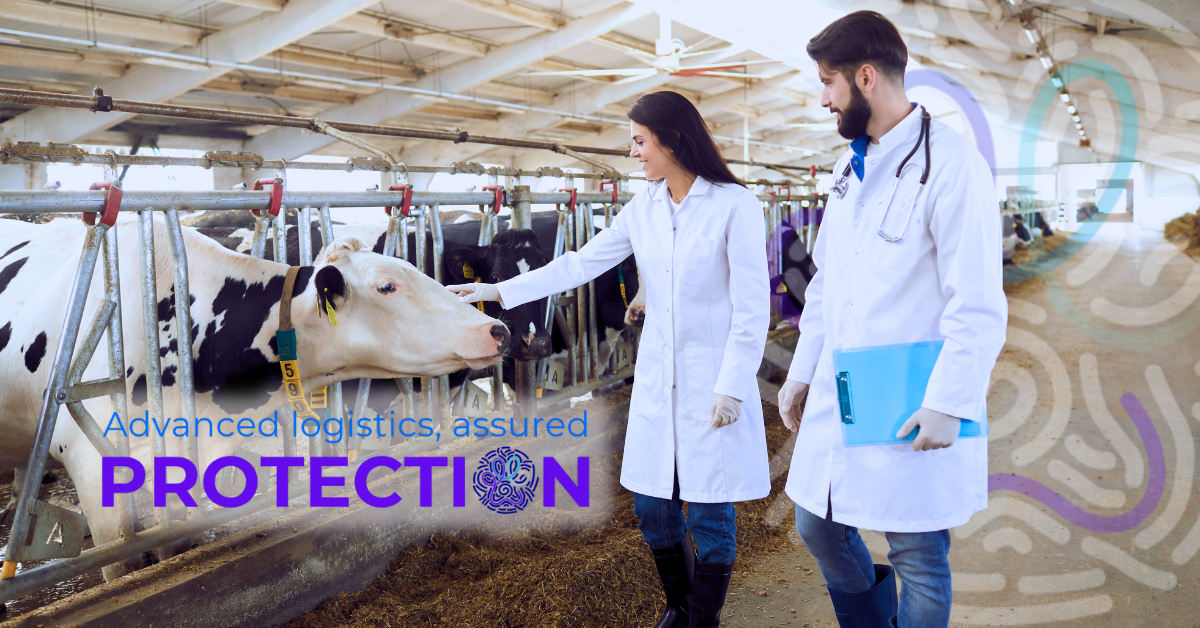
Animal Pharmaceuticals
06/22/2026
Continuous Data Isn’t Optional for Animal Health
Animal health teams are moving more temperature-sensitive materials through more complex distribution networks than ever before. Vaccines, biotherapeutics, reproductive materials, diagnostics, and advanced therapies are all crossing longer distances and passing through more handoffs to reach a wider mix of farms, clinics, production facilities, and research sites. As that complexity grows, the standard for what logistics data must show is also changing. Programs are increasingly expected to document the actual condition and custody of materials throughout transit rather than rely on fragmented records assembled after delivery.
Animal Health
05/21/2026
Lane Qualification Reduces Risk Before Shipments Move
Animal health biopharmaceutical programs put pressure on logistics networks in ways that standard route planning doesn’t always capture. Vaccines may move in defined seasonal windows, while monoclonal antibodies (mAbs), cell-based therapies, biologics, and other sensitive materials may move through channels with different timing constraints. Some shipments are tied to manufacturing release, others are tied to clinical study schedules, and still others are fitting into regional disease control programs or veterinary network demand.
Managing the Cold Chain
05/12/2026
Why Risk Analysis and Lane Qualification Matter for Regulatory Confidence
As programs move from mid-phase into later development, expectations around compliance change in both scale and tone. Early filings may tolerate explanation, but later submissions expect evidence. Teams preparing for Phase II transitions, Phase III trials, or global commercialization begin to encounter a different level of scrutiny, where regulators are less interested in intent and more focused on whether processes behave consistently under real operating conditions.
Managing the Cold Chain
04/21/2026