Validate Cryopreservation as a Defined Input, not a Variable
Most early‑stage cell therapy programs continue to rely on fresh starting material, particularly in pre‑clinical and Phase I development. That reliance is often driven by habit rather than data. Fresh workflows are familiar, but they also embed variability into the earliest experiments, where reproducibility is hardest to restore later. As development pressure increases, teams begin looking for ways to stabilize inputs without introducing new unknowns.
Cryopreservation is frequently viewed as one of those unknowns. Concerns about post‑thaw viability or altered cell behavior have shaped how cautiously frozen material is adopted, even as programs struggle with the inherent variability of fresh workflows. What is often overlooked is that these concerns stem less from freezing itself and more from how cryopreservation is performed. A poorly defined process leaves too many variables unresolved. A validated process does not.
This distinction matters because reproducibility depends on demonstrated behavior, not assumptions. When frozen starting material is prepared through a validated, standardized cryopreservation process, characteristics like post‑thaw recovery, viability, and functional performance are not open questions. They are established characteristics of the material. That assurance removes cryopreservation as a hidden variable and allows frozen inputs to be used with confidence.
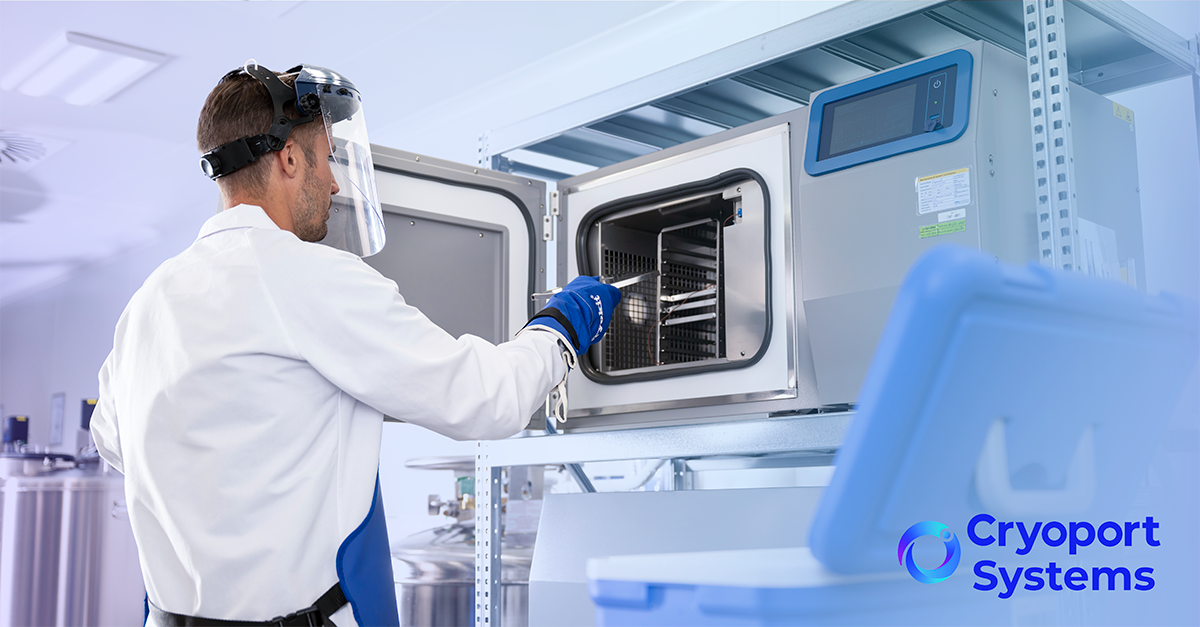
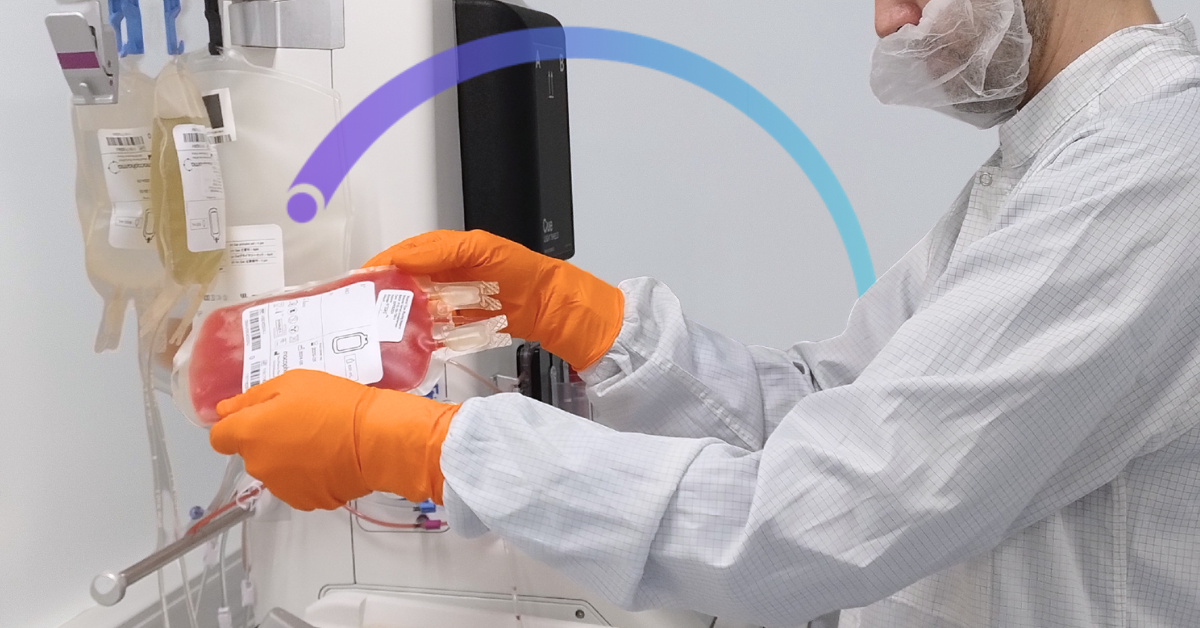
IntegriCell® was designed around that principle. Rather than asking early‑stage teams to validate their own freezing methods, Cryoport Systems provides access to an automated, closed process (ACP) for cryopreservation that has already been scientifically validated and standardized (with support for comparability studies when transitioning from fresh to frozen mid-phase). For programs beginning to incorporate frozen starting material, this shifts cryopreservation from a perceived risk to a controlled, defensible input that supports reproducibility from the outset.
Reproducibility Depends on Inputs that Behave the Same Way
Reproducibility in early development is often considered a function of process control. Assay robustness, operator training, equipment qualification… these areas all receive attention as programs work to reduce noise in experimental results. Starting material, however, is frequently treated as a given rather than a variable that requires the same level of definition. That assumption only holds if the material itself behaves consistently every time it is used.
When the starting material is not well defined, variability surfaces later in development (often after conclusions have already been drawn from early data). And as trials expand, it’s easy for variability in starting materials to creep in, especially with factors like collection site variability based on slightly different collection methods or distance, if the fresh leukapheresis material takes additional time to reach the manufacturing site. Without a clear understanding of how to standardize the starting material, teams may find themselves speculating about the root cause of variability rather than evaluating it.
Cryopreservation stops the clock on starting material, removing common sources of variability (such as the time from collection to manufacturing, which can affect cell viability and recovery). But it is critical that this step, frequently taken to remove areas of variability, doesn’t introduce new sources of its own. Cryopreservation concentrates multiple process decisions into a single step, and each of those decisions can influence post-thaw behavior. If cryopreservation is not performed consistently and within a validated framework, the frozen state can become a new source of uncertainty rather than stability.
Validated cryopreservation changes that dynamic. When a cryopreservation process has been scientifically characterized and shown to produce consistent post-thaw performance, the behavior of the frozen material is no longer inferred; it is known. Recovery, viability, and the functional attributes of the cells become defined characteristics of the input rather than variables that need to be re-established for each sample.
Treating cryopreservation as a validated process (rather than a procedural step) shifts frozen starting material into the same category as other controlled inputs. It establishes clear expectations for how the material will behave and removes ambiguity from downstream interpretation. In early development, where data density is limited and decisions carry forward quickly, that clarity matters.
Validation Should be Leveraged, Not Recreated
For early-stage programs and programs just beginning to feel the pressures of scale, validation often carries an implicit burden. Extensive internal studies and resources that are difficult to justify, especially when timelines are tight and data generation is the immediate priority, become daunting to navigate. As a result, processes that sit outside of core manufacturing, including cryopreservation, are frequently left under-characterized until variability forces the issue.
This approach assumes validation must be built in-house to be meaningful. In practice, it does not. When a cryopreservation process has already been scientifically validated, documented, and shown to produce consistent outcomes, early programs can incorporate these existing (proven) workflows without taking on the work of defining that process themselves. And for programs that are making the shift mid-phase to decouple collections from manufacturing, comparability studies are easily put in place to validate that the existing results hold true for a specific program, not just in concept.
For teams operating in pre-clinical and Phase I settings, reproducibility depends strongly on limiting the number of open questions tied to experimental inputs. Introducing a cryopreservation approach that is ad-hoc with site-to-site differences, or that is still being optimized or adapted, shifts a significant part of the team’s effort toward understanding the preservation step.
A validated process, like the ACP, brings a level of consistency that is difficult to achieve across distributed collection environments. As programs scale, sites expand and introduce more variability in collection and handling conditions and transit times. Even when intent is aligned, execution can vary from site to site, especially if cryopreservation is expected to be handled on-site at time of collection. Sites may have slightly different processes or equipment, and handling can vary from operator to operator in some cases. Leveraging a validated, standardized approach to cryopreservation that is handled the same way, every time results in starting material that behaves predictably regardless of collection site or care professional.
This is where validated cryopreservation becomes a structural advantage more than a technical detail. Instead of asking whether the freezing process has altered the cells, teams can proceed with a clear understanding of post-thaw behavior that has already been established. Cryopreservation becomes part of the controlled foundation supporting development and scale.
What Makes a Validated Cryopreservation Process Transferable
Not all validation is equally useful to early development teams. Methods that were validated under early conditions but then adapted over time, for example, often scale poorly as conditions change. Differences in collection sites or operators can quickly expose assumptions that were never formally tested. A transferable cryopreservation process has to be validated with that variability in mind from the start.
IntegriCell cryopreservation services were developed specifically to meet that requirement. Built around an automated, closed cryopreservation process, IntegriCell removes discretionary execution from the workflow and replaces it with defined, repeatable controls. Automation limits operator-dependent variability, and the closed system standardizes environmental factors that can be difficult to control consistently across locations. This approach creates a centralized process whose behavior can be characterized with confidence and reproduced reliably.
That technical foundation is reinforced through standardized, ISO-certified SOPs that govern how material is handled from collection through cryopreservation into biostorage and during transit to manufacturing. These procedures ensure that each batch is processed the same way, under the same conditions. Validation, in this context, is directly tied to proven post-thaw recovery, viability, and functional performance data generated under controlled and documented conditions.
This turns cryopreservation into a predictable input rather than a contextual risk. Teams are not relying on general confidence in freezing as a concept. They are relying on a specific, validated process whose outcomes have already been defined, allowing frozen starting material to be incorporated without raising additional questions about how cells will behave after thaw.
IntegriCell also supports comparability when programs transition from fresh to frozen material mid-development. Rather than treating that shift as a reset, comparability studies are used to demonstrate continuity between inputs. This ensures that data generated before and after the transition remains scientifically interpretable, preserving the value of early work while enabling more controlled inputs moving forward.
By anchoring cryopreservation in an automated, validated, standardized process, IntegriCell enables early programs to access the benefits of frozen starting material without inheriting the uncertainty that typically surrounds it. Validation is embedded in the process from the start.
Building Regulatory Confidence Through Defined Starting Material
Regulatory review depends on traceability and consistency. As programs move toward IND submission, reviewers are not only evaluating safety and clinical design. They are looking for evidence that the data supporting those decisions was generated using inputs that are well understood and controlled, and that the resulting assumptions can be reasonably expected to scale appropriately through the clinical phases of development. When variability cannot be clearly explained, confidence in the conclusions drawn from early studies quickly begins to erode.
Starting material plays a central role in that assessment. If the characteristics of the input are not clearly defined, questions about comparability surface. Validated cryopreservation strengthens the evidentiary support. When frozen starting material is prepared using a standardized process with established recovery, viability, and functional performance, the behavior of the input becomes part of a known system. That definition carries forward into regulatory interactions, where consistency between batches and sites must be demonstrated rather than argued. The frozen state itself doesn’t require justification when its effects have already been well characterized.
From an IND readiness perspective, adopting a validated cryopreservation process streamlines regulatory filings. Rather than representing a potential source of variability that must be explained, starting materials become a controlled input that supports consistency as programs scale. Regulatory confidence follows from that control. When starting material behavior is defined and reproducible, the focus of review remains on the therapy and its performance rather than on unresolved questions about how the cells were preserved.
Establishing Control Early to Support What Comes Next
Early development decisions carry downstream, where choices that were made to accommodate timing or resources often create variability or roadblocks to scale. Starting material is no exception. If variability is introduced at the beginning of a program, it rarely becomes easier to untangle later.
Validated cryopreservation offers a way to establish control without slowing early progress. By relying on a process with defined, demonstrated behavior, development teams can incorporate frozen starting material without introducing downstream uncertainty. Reproducibility becomes a characteristic of the supply chain rather than a goal that must be continuously re-established as programs grow more complex. Using starting material that behaves predictably supports continuity and preserves the value of early work.
Validating cryopreservation as a defined input, rather than treating it as a potential variable, reframes its role in development. It allows teams to focus on their therapy and reaching the next milestone, confident that the material entering the process will behave as expected. When that confidence is established early through a validated, standardized approach like IntegriCell, it becomes one less uncertainty to resolve as programs advance.