Advance Program Stability by Building Cryopreservation Into the System,
Not Around It
Cryopreservation has become a practical way for early programs to give themselves more room to plan, especially when collection schedules don’t line up neatly with manufacturing availability. How the material actually enters the frozen state, though, has a noticeable influence on what teams see later in development. When sites follow their own methods or adapt the process to local routines, those differences show up in the frozen material and stay with it.
In the earliest work, this rarely stands out; those studies are designed to tolerate a certain amount of variation. As the program moves into more structured development, the flexibility that once masked these differences starts to narrow. At that point, the program depends on the frozen material behaving in a consistent way, and the earlier inconsistencies become much harder to ignore.
When early-stage cell and gene (CGT) programs begin preparing for IND or regulatory filings, gaps inevitably emerge. The record should, in theory, demonstrate a consistent approach, but what teams often discover is that in reality, the work was done reliably but not in a standardized way that produces a clear, unified history. Batches may have been handled using slightly different procedures, or according to local habits or operations that exist as local practices that were never formalized. This typically doesn’t create a safety concern, but it does create documentation challenges later. A cryopreservation method built around automation and GMP principles helps to prevent that drift. When the entire process is designed from the start to follow a consistent, repeatable workflow, the frozen material becomes a more predictable input.
Integrating cryopreservation into an end-to-end supply chain platform provides additional strength. Consolidating key services (such as biostorage, kitting, secondary packaging, and transport lanes) into an integrated, single-vendor partnership establishes a consistent set of controls within a single quality and compliance framework, providing stability at scale as sites and geographies expand. For early-phase programs, this helps reduce or eliminate the need to revisit past operational choices while preparing for IND filings, since the program was built from the start on a technically solid foundation that scales without constant adjustment.
GMP Alignment Matters from the Start
As a program moves beyond feasibility work and begins progress toward first-in-human (FIH) trials, cryopreserved starting material is part of the evidentiary support for understanding process behavior. This is the point at which regulators and internal teams alike look for signals that the same preparation led to the same condition, regardless of where or when the work was performed. A cryopreservation process that shows variability between locations introduces uncertainty. The frozen material itself is the direct result of each local process and its unique adaptations, complicating any attempt to show that the process itself is stable.
In early development, broader tolerances mask the impact of upstream variation. As the program advances, the same assays and processes are evaluated under tighter expectations, and the influence of inconsistent inputs becomes more visible. When inputs vary from batch to batch, it becomes harder to attribute results to the process rather than to upstream conditions.
Regulatory expectations further compound this. While GMP manufacturing isn’t required from the start, agencies expect that processes have been well-controlled and documented. They look for consistency in how the starting material was cryopreserved, and whether that approach was maintained as the program evolved. If the record shows multiple possible versions of the same initial step, the team must validate and explain what changed (and why), sometimes with demonstrated comparability studies, adding time and effort to a submission already operating under tight timelines.
GMP alignment early in development prevents programs from falling into this (avoidable) pattern. With consistent conditions throughout, teams generate cleaner data and a stronger technical foundation. Instead of explaining variability that could have been prevented, teams can present a record that demonstrates continuity was maintained from the beginning. A GMP-aligned approach doesn’t add unnecessary complexity. It reduces the number of factors that later require explanation and limits the conditions that could introduce variability into the frozen state.
Standardizing Cryopreservation with an Automated Closed Process
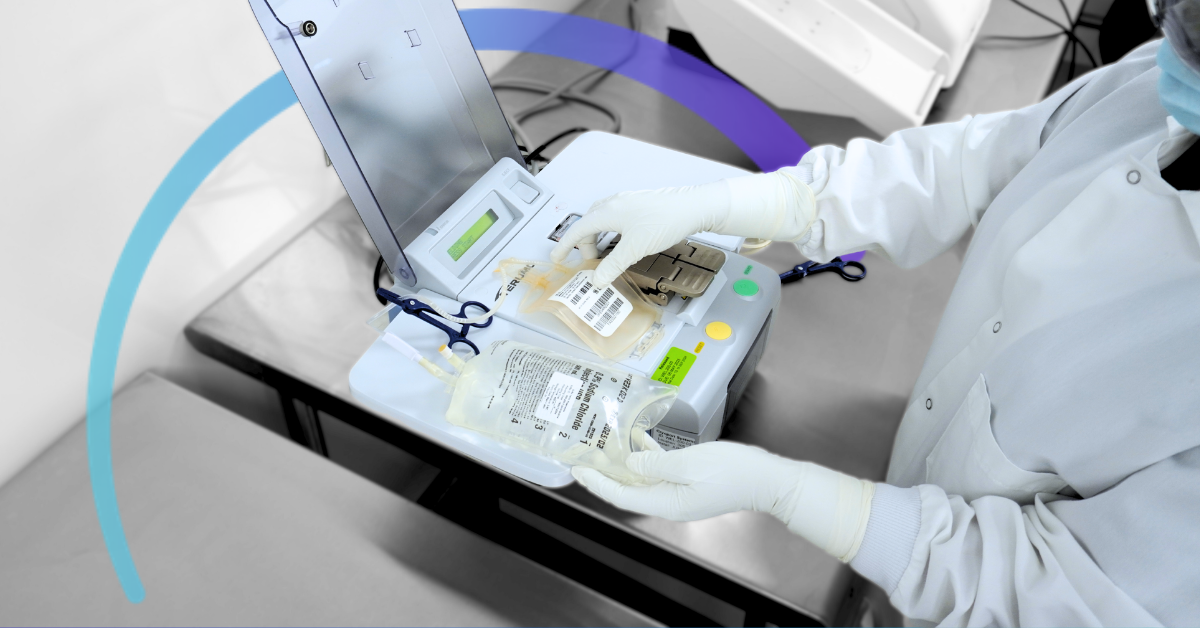
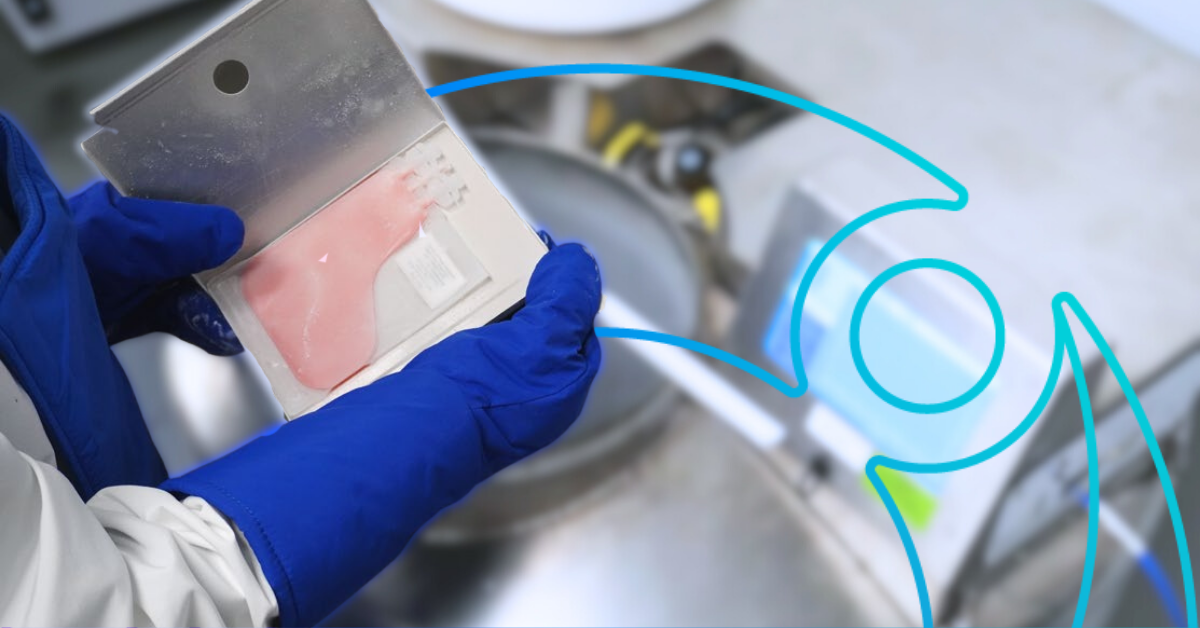
A standardized method is most effective when the underlying system is purpose-built to minimize operator-dependent variation. IntegriCell® cryopreservation services were built around that requirement. Its automated closed process (ACP) establishes a controlled environment that governs how the material moves from preparation through freezing to the cryopreserved state, without relying on informal techniques or local workarounds. The platform limits the points at which subjective decisions can influence the outcome, replacing them with defined steps that maintain consistency.
With the closed design reducing the number of open handling stages and automation adding another layer of consistency, the cryopreserved material handled within the ACP reliably reflects the intended method rather than the habits of a particular site or operator.
Integration and the Role of End-to-End Support
Cryopreservation stabilizes the material, but that stability only holds if the environment around it remains controlled. Once the cells are frozen, the conditions in biostorage and the way the material is shipped start to shape what teams will see later. Different facilities manage storage in their own ways, and those differences matter. Secondary packaging choices and transport practices add their own influence as the material leaves storage and enters distribution.
If these steps sit under separate vendors or follow different quality systems, the supply chain begins to pick up small variations from each part of the chain. Over time, those differences accumulate, making the overall system harder to interpret, especially when teams need the frozen material to behave consistently across sites.
An integrated approach reduces those points of divergence. Biostorage facilities that are co-located with cryopreservation, for example, reduce the number of shipments and handoff points. And when biostorage and cryopreservation are then co-located with logistics operations, there is yet another handoff avoided when the material is ready to move to manufacturing.
This approach doesn’t require programs to redesign their operations. It relies on a framework where each part of the chain follows the same controls, which is already how Cryoport Systems is structured across its global network, including our Global Supply Chain Centers that bring together the full end-to-end supply chain under one roof and within a single vendor partnership.
The processes governing cryopreservation are undoubtedly a foundational part of regulatory submissions. But regulatory reviewers assess the system supporting cryopreservation (and the end-to-end supply chain) as much as the result. Alignment across cryopreservation, storage, and shipping reduces the need for justification because the same controls govern each part of the chain. It also lowers the operational burden normally associated with reconciling multiple vendors during IND preparation.
Scalability and Long-Term Program Stability
Programs that begin with flexible assumptions often find that those assumptions later create constraints as additional sites come online and geographic regions expand. Cryopreservation is often the first place where this shift shows up.
A standardized approach prevents that gradual divergence. When new sites join the program, the starting material is cryopreserved using the same ACP approach rather than adapting protocols to their own environment.
Integrated biostorage and logistics have the same effect. When the same operating model is used across regions, teams no longer have to reconcile differences in equipment or procedures. The frozen material moves through a system that behaves the same way regardless of location.
When cryopreservation, storage, packaging, and transport operate within the same framework, the frozen material retains the state it was designed to hold. This creates a stable foundation for development, supports the evidence needed for IND review, and provides programs with a path to scale without having to reconstruct their early decisions.