
How Defragmenting the Pre-Clinical Supply Chain De-Risks Downstream Operations
Every stage of the supply chain including cryopreservation, logistics, and and BioServices and biostorage, must align to ensure a seamless transition from pre-clinical work into Phase I trials. However, early-stage teams often select multiple vendors who each handle one piece of the process because it feels faster or more cost-effective in the moment. This approach, however, builds fragmented supply chains that introduce gaps as programs scale. And when those gaps surface, teams must devote valuable time and effort simply to get back on track.
Establishing unified support across cryopreservation, logistics, BioServices and biostorage, and consulting at the pre-clinical stage eliminates these downstream interruptions. Cryoport Systems’ integrated platform defragments the supply chain by connecting services end-to-end. With a unified supply chain platform, teams preserve time, resources, and predictability rather than troubleshooting preventable issues later in development.
Fragmentation Starts Early and Follows Programs Forward
Fragmentation often begins as a practical tradeoff. Lean teams piece together multiple vendors for shipping, biostorage, and cryopreservation because it feels faster and cheaper. A courier may be contracted for leukapheresis transport. Later, a biostorage provider is added. But as enrollment grows and trial sites expand, these disconnected choices evolve into operational instability.
The cracks become visible when something goes wrong. A temperature excursion occurs, but no alert is issued because monitoring and documentation sit in separate systems. Or batch release is delayed because each biostorage site has its own authorization requirements and notice windows. These gaps mean sites may receive unusable material or miss scheduled manufacturing slots, stalling progress and pushing out milestones. Streamlined management across sites and services isn’t only nice to have. It’s essential for Phase I readiness and long-term scalability.
Defragmentation as a Strategy for Scaling
This streamlined support must begin before manufacturing. Providers that secure starting material and deliver it to development sites ensure that critical material is available exactly when it’s needed. Consistency in handling reduces coordination burden and prevents avoidable delays as trials scale.
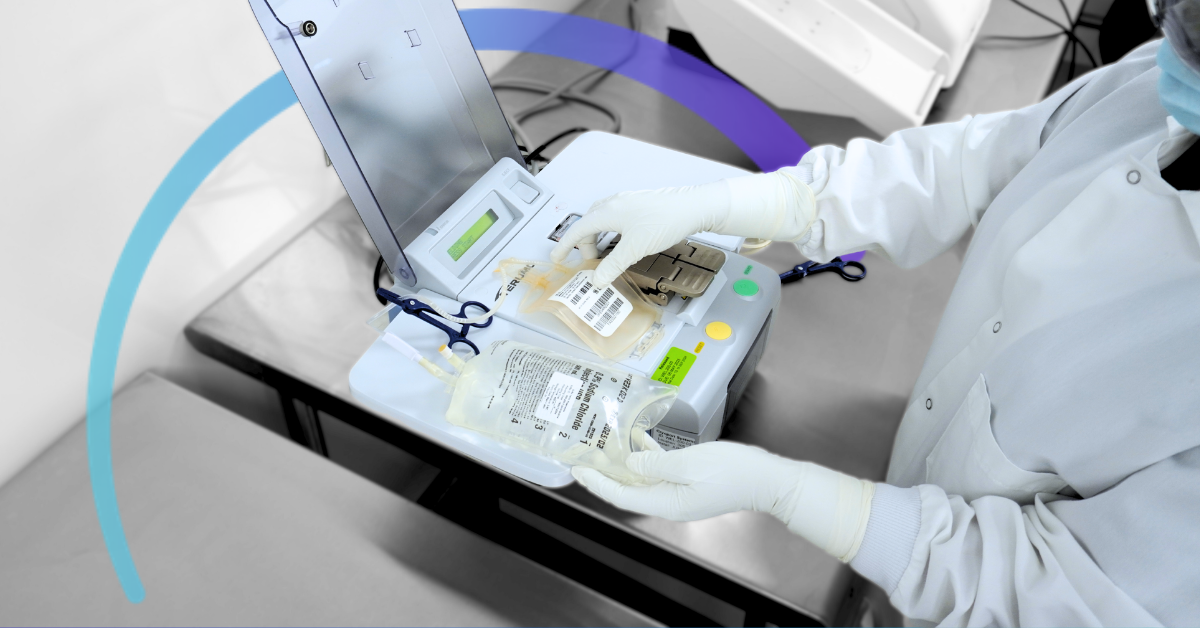
Upstream of manufacturing, Cryoport Systems’ IntegriCell® solution provides standardized cryopreservation for leukapheresis-derived starting materials using an automated, closed process. This approach supplies teams with consistent starting material without requiring immediate manufacturing post-collection, helping to decouple collection from manufacturing. Material integrity is preserved post-collection and can be scheduled for manufacturing or stored for later use within our integrated biostorage facilities.
When materials are ready to move, our global transport capabilities connect them to sites and facilities worldwide. Our shipping systems, including the Cryoport Express® Cryogenic HV3 and the Cryoport Elite® Ultra Cold, are engineered to be impact-resistant while maintaining consistent temperatures. Each system is fully requalified before use to confirm hold time, temperature stability, and structural integrity, and decontaminated using our Veri-Clean® validated process to eliminate 99.9999% of bacteria, viruses, and fungi. With the industry’s largest, wholly-owned fleet of shipping systems, our operational model allows for global dispatch with rapid turnaround times for just-in-time logistics and shipping support that scales seamlessly with your program.
Across all movements, our Chain of Compliance® framework establishes cohesive visibility. It documents chain of custody, chain of identity, and chain of condition across the temperature-controlled supply chain. This insight is continuously tracked and compiled into audit-ready records that validate how materials were handled, and within what environmental conditions, from origin to destination.
This connected management model builds predictability into programs from pre-clinical stages, seamlessly scaling through clinical trials and eventually into global commercialization. A cohesive, integrated supply chain platform reduces hand-offs, mitigates risk end-to-end, and enables scale according to program needs rather than restricting growth as a result of vendor limitations. New sites can be added across a global footprint and within the same oversight and quality framework, supporting growth regardless of geography.
Reducing Variability Before It Becomes a Regulatory Issue
A connected supply chain helps programs align with what regulators will expect as they progress toward approval. But alignment depends on consistent processes across all stakeholders. While in-house teams may operate uniformly, additional facilities like CROs, CDMOs, and clinical sites will each bring their own procedures. PD and MSAT teams can’t function effectively without clearly communicated, standardized processes. As programs progress, variability in shipping lanes or packaging performance becomes harder to manage when early decisions weren’t built on quantified risk. This is where many pre-clinical teams start to run into preventable delays from routes that were never qualified or packaging and shipping systems that lack real-world performance data. Cryoport Systems’ consulting and advisory services focus on these early technical gaps. By focusing on assessing temperature-controlled risks, qualifying shipping lanes ahead of Phase I trials, and validating shipping and packaging systems, we help ensure that programs have documented performance data before moving into the next stages, with audit-ready documentation that can be added directly to your regulatory filings. Each engagement is scoped to the material’s temperature profile, stability data, and projected trial footprint, with controls adjusted as sites and geographies are added. The result is a clear operational baseline from the start, which reduces the number of surprises that typically surface during IND preparation or Phase I scale-up.
This commitment to consistency extends to BioServices and biostorage. Cryoport Systems pairs GMP storage with services like kit production and secondary packaging and labeling to ensure material handling stays aligned with regulatory expectations. Our Global Supply Chain Centers consolidate these activities in one controlled environment, where materials can be stored, prepared, packaged, and shipped without unnecessary transfers.
A defragmented supply chain reduces the back‑and‑forth required to align multiple stakeholders around program nuances. With one provider managing the end-to-end, temperature-controlled supply chain, processes become more predictable and documentation remains consistent. Regulators see unified procedures rather than a patchwork of approaches, and investors gain confidence in scalability as the program progresses to later-stage trials and commercialization.
The End-to-End Platform Advantage from Day One
A single vendor for supply chain management creates a unified model based on shared responsibility and an aligned outcome. Cryoport Systems delivers this continuity through an integrated platform spanning cryopreservation, logistics, BioServices and biostorage, and consulting. Instead of piecing together vendors, early-stage teams benefit from cohesive alignment from day one.
Reducing vendor count removes a significant portion of the operational friction that pre-clinical teams face. Workflows move smoothly without extra handoffs, tech transfers, or competing processes that can slow progress. Timelines become easier to maintain, and budgets gain predictability. Programs advance with continuity rather than cycling through preventable disruptions.
Advancing a therapy from discovery into early development requires more than scientific rigor. Every stage of the supply chain must protect material integrity, maintain end‑to‑end transport continuity, and ensure uniform handling to keep programs on track.
Cryoport Systems partners with pre‑clinical groups to integrate cryopreservation, logistics, BioServices and biostorage, and consulting solutions under a single framework. Defragmenting the supply chain means early‑stage work proceeds with fewer interruptions and clearer oversight. Your team can focus on moving toward first in-human studies without the operational surprises that often derail early programs. Building a defragmented, integrated supply chain now ensures that early decisions hold up under the pressure of scale, rather than becoming the source of delays later on.