What Will It Take to Move Cell Therapy Forward? Reflections from the Hope Is Not a Workflow Panel
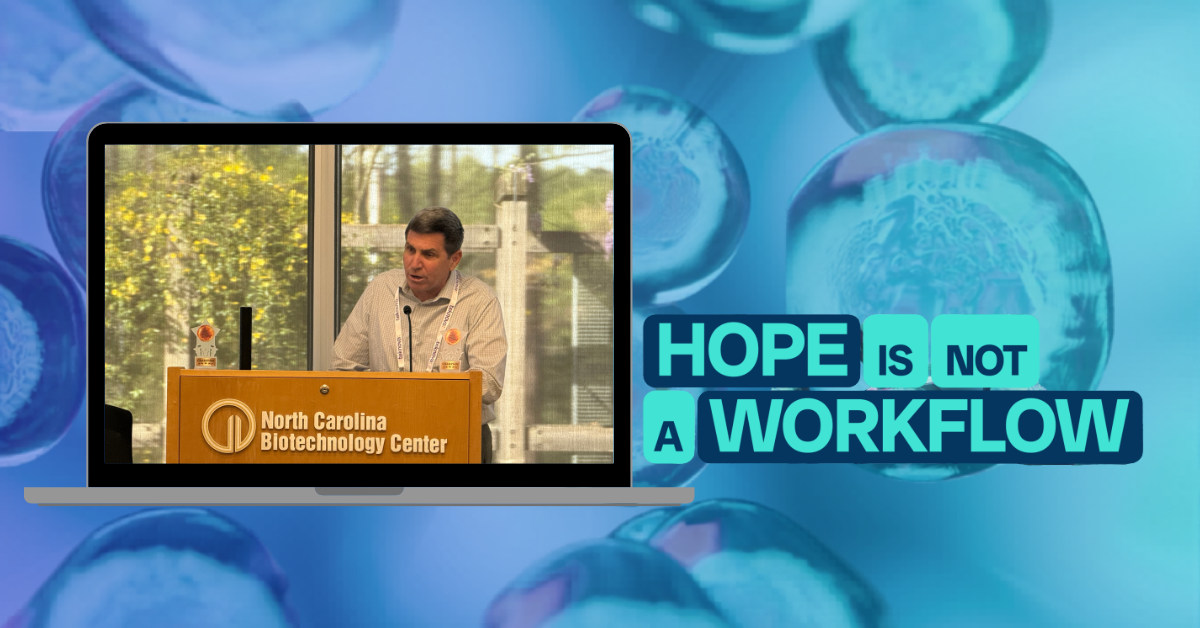
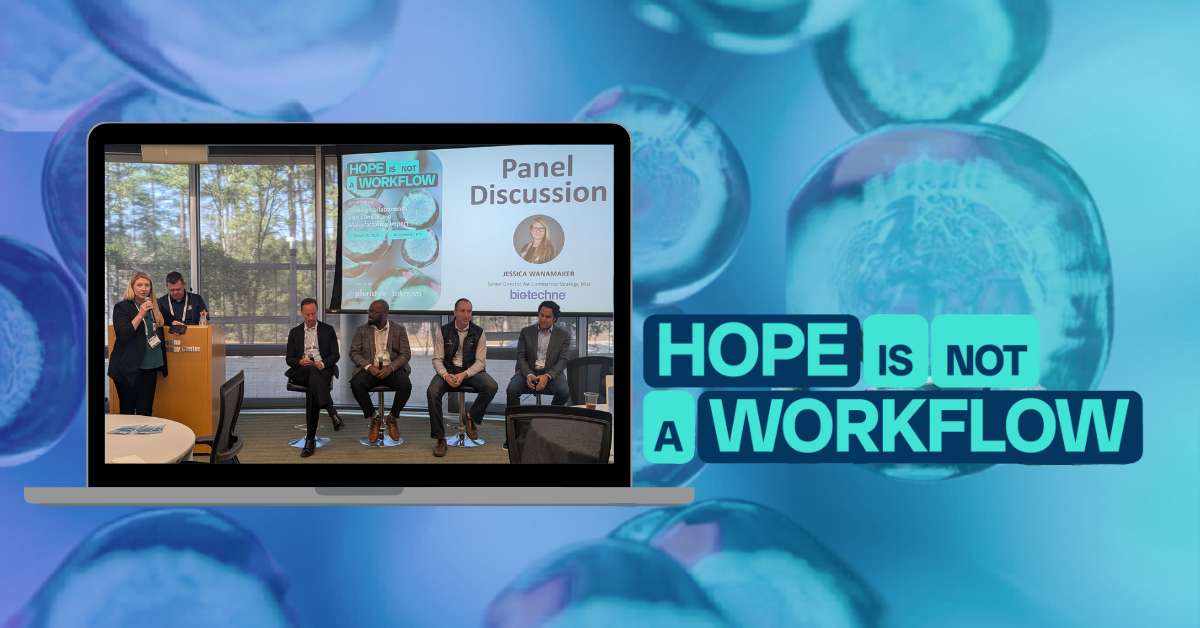
At the recent Hope Is Not a Workflow event, industry leaders came together to tackle some of the most persistent questions facing cell and gene therapy today. During a panel, Dominic Clarke (VP, IntegriCell® Technical Operations, Cryoport Systems) joined the discussion to share his perspective on what is slowing adoption and what it will take to move the industry forward in a meaningful way.
The discussion didn’t point to a single, easy answer. Instead, the trend that emerged was a set of interconnected challenges around education, access, cost, and collaboration that continue to shape how therapies reach patients.
Education Remains a Foundational Need
When asked what work still needs to be done and where the industry should be focusing its efforts, Dominic returned to a theme that surfaced repeatedly throughout the discussion: education.
Despite the fact that many commercially approved cell therapies exist today, there remains a significant gap in understanding across the ecosystem. That gap spans solution providers and developers learning from one another, physicians administering therapies, and patients navigating treatment decisions.
Education, Dominic emphasized, is not optional or “nice to have.” It’s fundamental to progress, especially for therapies that are still viewed as complex, novel, or risky by those outside of specialized treatment centers.
Data is Positive, but Adoption is Limited
One of the more pointed questions centered on a frustrating reality in which clinical results are strong, yet relatively few patients have actually received treatment. Why?
Access and education, according to the panel, are primary limiting factors, especially outside of major academic medical centers. Community hospitals, for example, often lack exposure or infrastructure (or even confidence) in administering these therapies. At the same time, patients themselves may not be aware that cell therapy is an option or may face barriers that prevent them from pursuing it.
Cost remains another major hurdle. While the industry continues to make progress in addressing affordability and scalability, it’s still a work in progress. The tension between innovation and accessibility remains unsolved.
Rethinking Pricing and Reimbursement Models
The panel also spoke to pricing, which remains one of the most debated topics in the space. Should the industry move toward value-based pricing models? Is direct-to-patient a viable path forward?
Dominic noted that there is unlikely to be one universal answer. The reality differs significantly between regions, for example, especially when comparing the U.S. and Europe. Rather than choosing a single model, the future may lie in a blended approach that can adapt to different healthcare systems and patient populations.
Ultimately, the question circles back to access. How do we control costs while still serving broader populations, and how do we ensure that life-changing therapies are not limited to a narrow subset of patients? These will be important questions to resolve as the industry continues to mature.
What “Working Well Together” Really Means
The panel touched on what effective collaboration looks like across the cell and gene therapy community, emphasizing the importance of integrated solutions and shared visibility.
Using Cryoport Systems as an example, Dominic described how end-to-end tracking from patient collection to manufacturing and back to the patient creates continuity and control. As enabling technologies continue to evolve, including the increased use of data-driven tools, the ability to refine and scale those workflows will be critical.
Working well together, in this context, goes beyond cooperation. It’s really about building systems that allow therapies to move safely and transparently through the entire lifecycle.
Centralized, Decentralized, or Both?
The debate around centralized versus decentralized manufacturing continues to divide opinion, and the panel discussion reflected that nuance.
Dominic’s stance is that the results across the industry are mixed, and the most realistic answer is “both.” Certain aspects of the process (like patient collections and cryopreservation) lend themselves well to decentralization. Manufacturing, on the other hand, remains far more challenging to replicate consistently as a decentralized approach.
As with many other issues in the industry, there is no one-size-fits-all model. Different therapies, indications, and patient populations will require different approaches.
Resilience as a Defining Theme
When asked to suggest a topic for a future symposium, Dominic proposed “resilience,” a word that resonated strongly with the audience.
The cell and gene therapy industry has endured scientific setbacks, operational challenges, regulatory complexity, and public skepticism. Yet it continues to move forward. Resilience is not just something the industry has demonstrated; it is something it must continue to cultivate at the macro and micro levels alike.
Turning Conversation into Action
Perhaps the most actionable moment came when the panel turned its focus to next steps. What is one thing the industry can do now to move the needle?
Dominic suggested a straightforward answer: “memorialize the conversations.” Capturing what is being discussed, identifying the top two or three actionable insights, and carrying them forward in a concrete way.
He also underscored a deeper, ongoing challenge in the stigma that still surrounds cell therapies. Even today, some stakeholders will default to “no,” driven by perception more than evidence. Once again, the solution comes back to education.
Progress will require persistence and a willingness to continue the conversation beyond the conference room.