
Cryoport Systems’ Temperature-Controlled Supply Chain Blog
Learn more from our expert leaders on the latest industry trends, global news, and company updates.

Managing the Cold Chain
10/20/2026
Extended Manufacturability: Why Cryopreservation is a Commercial Enabler
For cell therapy developers approaching commercialization, manufacturing architecture is a strategic consideration. Decisions made early in the development phases regarding starting material sourcing, process design, storage strategy, and supply chain architecture begin to influence capacity planning, cost structures, operational flexibility, and ultimately patient access.
Supply Chain
10/20/2026
Commercial Readiness: The ROI of Defragmented Supply Chains
As advanced therapy programs approach commercialization, organizations discover that operational complexity has become their biggest challenge. Despite proven manufacturing processes, clearly defined regulatory pathways, and commercial planning underway, the underlying supply chain remains a collection of systems, vendors, and workflows that evolved over years of clinical development.
Supply Chain
09/18/2026
Align Cryopreservation Services with Regulatory Expectations Through Audit-Ready Process Design
Regulatory expectations become increasingly rigorous as cell and gene therapy programs progress from development into clinical trials and commercialization. Processes that were adequate during early-stage research are expected to withstand much greater scrutiny once an investigational new drug application (IND) is filed, clinical sites begin enrolling patients, or inspectors request documentation demonstrating process control.
Supply Chain
09/16/2026
Integrated Services That Pass Inspections
An upcoming audit or inspection can be a stressful event. Most sponsors have their documents and processes in place, but in the audit scenario, the question becomes whether teams can defend these processes. From the supply chain management side, it’s about producing evidence that demonstrates control across every site and handoff. Regulators expect documented processes, validated systems, qualified transportation lanes, and complete chain-of-custody and chain-of-condition records. They also expect quality to be built into daily operations, not reconstructed in the weeks leading up to an inspection.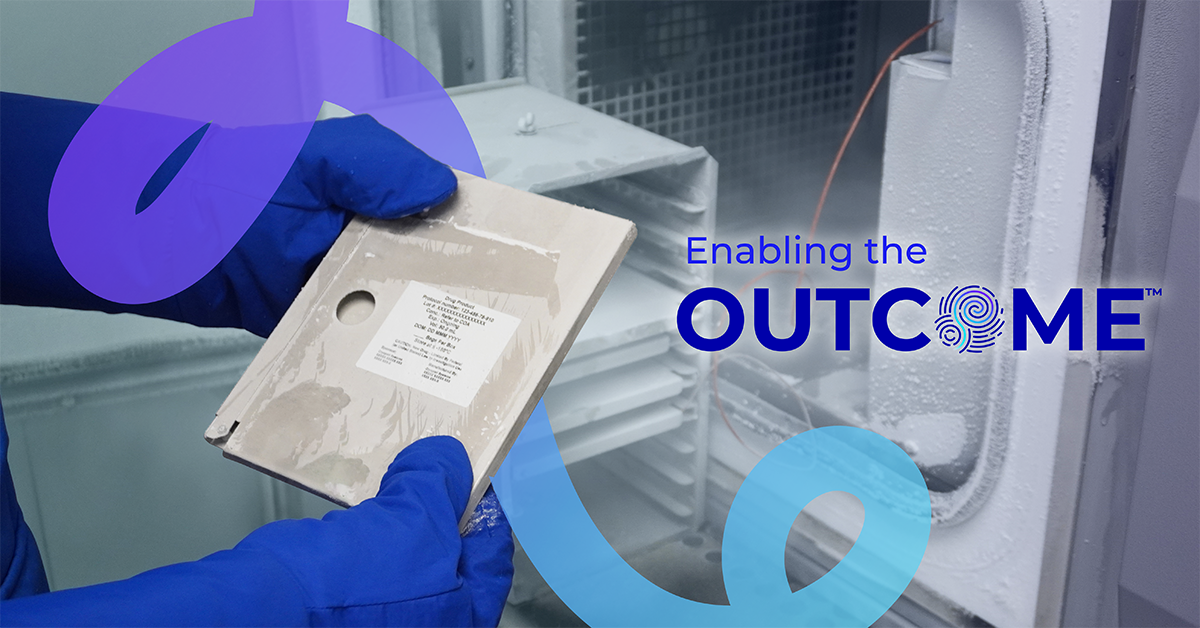
Supply Chain
08/03/2026
Streamline Cell Therapy Operations by Reducing Requalification
Advancing a cell therapy program into late-stage clinical development is an exciting milestone, but operationally complex. As organizations prepare to expand manufacturing capacity or onboard additional clinical sites, scaling operationally can be just as demanding as advancing the science. One of the most overlooked obstacles is requalification. While qualification activities are a necessary component of maintaining quality and regulatory compliance, repeated requalification events consume significant time and budget. Straightforward expansion efforts can quickly become a series of validation exercises and cross-functional reviews that extend timelines and increases costs.
Supply Chain
08/01/2026
The Fast Track to Global Expansion: Consistency Across Every Site
For cell and gene therapy developers, expansion is rarely as simple as adding a new country or introducing a new logistics lane. What appears to be a straightforward geographic scale-up often triggers operational and quality challenges through supplier requalification, packaging validation reviews, local process assessments, documentation updates, and regulatory scrutiny. Systems that must be rebuilt every time new market entry is desired slows progress and, as clinical trials become increasingly global, organizations need infrastructure that scales with them.
Managing the Cold Chain
07/07/2026
Expand Trial Footprints Without Expanding Cryopreservation Risk
For many cell therapy programs, the move from fresh to frozen starting material is treated as the moment when variability starts to come under control. And in many ways, that’s true. Fresh leukapheresis-derived starting material is inherently difficult to build around. It is biologically active, time-sensitive, and highly dependent on how quickly and consistently it can move from collection into the next step of the process. Even under strong operational oversight, additional variables around timing, handling, transport duration, pre-processing wait time, and local execution can all influence the condition of the material before manufacturing ever begins.
Managing the Cold Chain
07/07/2026
When Local Variation Becomes Global Risk in Phase III
By the time an advanced therapy program reaches Phase III, the supply chain is no longer being judged only by whether material can move from one point to another. It is being judged by whether that movement can be repeated across sites, regions, service providers, and regulatory environments in a way that produces a consistent and defensible record of execution.
Managing the Cold Chain
07/07/2026
“Regulatory Readiness is Built Early” and Other Lessons for CGT Developers
Advanced therapy developers are used to making hard decisions under pressure. In early development, the priority is often clear: reach the clinic, generate meaningful data, and keep the program moving. This was the central theme of the recent webinar, “Prevent Advanced Therapy Program Delays with Early Supply Chain Strategy.” The expert panel explored why early supply chain decisions deserve strategic attention long before a program reaches pivotal trials or filing preparation.Categories
- All (68)
- Industry Insights (24)
- Managing the Cold Chain (65)
- Navigating Logistics (27)
- Patient Access and Awareness (8)
Topics
- Asia
- ATMPs
- Biologics
- BioServices
- Biostorage
- CDMO
- CDMOs
- Cell Therapy
- Clinical Trials
- Cold Chain Management
- Commercialization
- CROs
- Cryopreservation
- Europe
- Fragmentation
- Gene Therapy
- Global Logistics Tracking
- Global Supply Chain Management
- International Shipping
- North America
- Risk Mitigation
- Standards and Compliance
- Supply Chain Management